
The GoveeLife WiFi Refrigerator Thermometer 2-Pack sits in a quieter corner of the smart-home world: the small, practical gadgets that do one job and do it in the background. This is not a flashy countertop appliance or a screen-covered kitchen toy. It is a pair of connected temperature senso...
The GoveeLife WiFi Refrigerator Thermometer 2-Pack sits in a quieter corner of the smart-home world: the small, practical gadgets that do one job and do it in the background. This is not a flashy countertop appliance or a screen-covered kitchen toy. It is a pair of connected temperature sensors built to watch your fridge and freezer, send alerts if something drifts out of range, and give you a record of what happened. For households that store breast milk, medication, bulk meat, meal prep, or just a lot of expensive groceries, that is a more useful promise than it may sound at first glance.
This article is not a hands-on review. Nothing here is based on personally using the product. Instead, the goal is to explain what the GoveeLife WiFi Refrigerator Thermometer 2-Pack actually is, how its listed features translate into real life, and who it makes sense for. If you are deciding whether this is a genuinely smart kitchen upgrade or simply another app-connected gadget, this is the calmer version of that conversation.
📺 Watch: GoveeLife WiFi Refrigerator Thermometer 2-Pack in context
Quick snapshot
| Question | What the GoveeLife WiFi Refrigerator Thermometer 2-Pack actually is |
|---|---|
| Category | Kitchen & Dining |
| Made by | GoveeLife |
| Typical price | ~$78 CAD (listing at the time of writing — verify current pricing) |
| Rating signal | 4.4/5 on the source listing |
| Best for | Households that want remote fridge/freezer monitoring, food-safety-minded families, cottage owners, and anyone who has lost groceries to a bad door seal or power issue |
| Skip if | You only want a simple analog fridge thermometer, dislike app setup, or do not care about remote alerts or temperature history |
Pro tip: Put one sensor in the freezer and one in the fridge first, not both in the same compartment. That sounds obvious, but for most homes the real value of a 2-pack is full cold-storage coverage, not hyper-analyzing one shelf.
What the GoveeLife WiFi Refrigerator Thermometer 2-Pack actually is
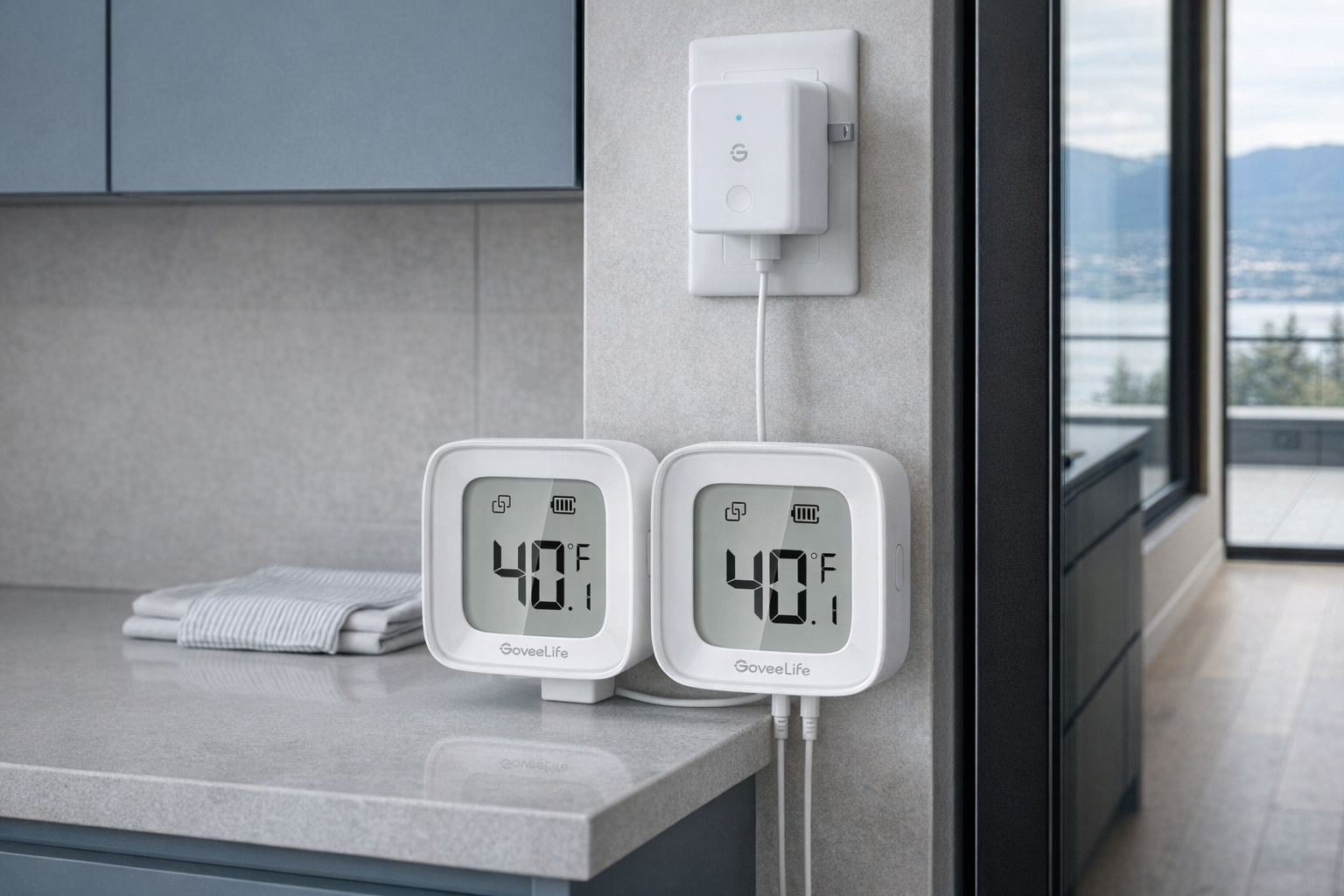
In plain English, this is a connected temperature-monitoring kit for your cold food storage. You place the sensors inside a refrigerator and freezer, connect them through the GoveeLife setup, and then use the app to check temperatures remotely, set safe ranges, and receive alerts if the temperature goes too high or low. The built-in LCD displays matter too: this is not just an invisible app product. You can still glance at the unit and see the reading without opening your phone.
WiFi refrigerator thermometer 2-pack with alarm, wireless digital freezer temperature gauge with app control, LCD display, and 2 years free data export. Features smart anti-false alarm, ±0.9°F accuracy, and supports up to 10 sensors per gateway.
The easiest comparison is to a simple non-connected fridge thermometer, or to a Bluetooth-only option like the Govee Bluetooth Hygrometer Thermometer line. The big difference is remote access. A basic dial thermometer tells you the temperature only when you stand in front of the fridge and look at it. A Bluetooth sensor usually requires you to be nearby. This GoveeLife model is aimed at the more practical problem: finding out from somewhere else in the house — or away from home — that a freezer door was left ajar, that a garage fridge is struggling, or that a power interruption has pushed things into an unsafe zone. That is a more honest use of “smart” than many kitchen gadgets.
Key features at a glance
- 2-pack design for monitoring a fridge and freezer at the same time
- 24/7 instant app alarms when temperature goes out of your chosen range
- WiFi remote monitoring through the GoveeLife app
- ±0.9°F accuracy for tighter tracking than a cheap analog gauge
- 2-second refresh rate for faster updates than slower ambient sensors
- Smart anti-false alarm to reduce unnecessary alerts when the door is briefly opened
- LCD display on each unit for at-a-glance local readings
- 2 years of free data storage and export for tracking and record-keeping
- Support for up to 10 sensors per gateway, according to the listing
How the GoveeLife WiFi Refrigerator Thermometer 2-Pack actually works
At a basic level, these are digital temperature sensors that sit inside cold storage and report readings to the GoveeLife system. The listed feature set points to a setup where the sensors measure temperature frequently — every 2 seconds, according to the product details — and then push that information to the app so you can see current readings and history. You are not just buying a display; you are buying notification logic and logging.
That notification logic is the main point. Refrigerator temperatures fluctuate constantly when a door opens, when warm leftovers go in, or when a defrost cycle happens. A cheap alarm can be more annoying than useful if it chirps every time someone grabs milk. GoveeLife specifically calls out a smart anti-false alarm, which suggests the system is designed to distinguish a brief, normal spike from a sustained problem. That matters because if every normal door opening triggers a warning, most people will mute the alerts by day three.
There are really three layers to the product:
- The local layer: each sensor reads temperature and shows it on its LCD screen.
- The app layer: the GoveeLife app lets you check readings remotely and set acceptable temperature ranges.
- The history layer: the system stores data for up to 2 years and allows export, which is useful for spotting patterns rather than one-off incidents.
That last part makes this more than a convenience gadget. If a basement freezer keeps creeping warmer overnight, or a second fridge in the garage struggles during a heat wave, the trend line is often more revealing than a single number. The history feature is what turns “something feels off” into “this appliance has been drifting above normal every afternoon for two weeks.” For anyone protecting food, medication, or specialty ingredients, that is the real value.
A realistic "day in the life" with GoveeLife WiFi Refrigerator Thermometer 2-Pack
Because this is an informational piece, the scenario below is based on the listed features and how products like this are typically used — not on direct testing.
- Morning. You check the app before heading to work and see that the kitchen fridge and freezer are both in their normal ranges. One quick glance confirms that last night's grocery load did not leave the fridge warmer than expected.
- Midday. Someone at home opens the freezer several times making lunch. The temperature briefly shifts, but the anti-false alarm logic is meant to avoid pestering you over normal use. That is exactly the kind of feature that sounds small on the box and large in real life.
- Afternoon. A garage fridge starts climbing past the upper threshold you set. Instead of discovering the problem hours later when milk is warm or meat is questionable, you get an app alert while you're out and can ask someone to check the door or power.
- Evening. You review the historical graph and notice the freezer has been running a bit warmer than usual at the same time every day. That does not automatically mean a failing appliance, but it gives you something solid to watch before food gets ruined.
Who the GoveeLife WiFi Refrigerator Thermometer 2-Pack is actually for (and who it isn't)
Great fits
- Families with a packed main fridge and freezer who want a warning before hundreds of dollars in groceries go bad.
- Parents storing breast milk and wanting more confidence than “the fridge feels cold enough.”
- People with a garage, basement, or cottage fridge/freezer where problems can go unnoticed for hours or days.
- Meal preppers, hunters, fishers, and bulk shoppers who keep a lot of meat or frozen food on hand.
- Households storing temperature-sensitive medication and wanting a log, not just a guess.
- Anyone replacing “open the door and hope” with actual data about fridge performance.
Poor fits
- People with a small apartment fridge and low food volume who would be fine with a $10 analog thermometer.
- Buyers who do not want another app or another connected device on home Wi-Fi.
- Anyone expecting this to control appliance temperature rather than just monitor and alert.
- Households that ignore notifications because a warning system only helps if somebody acts on it.
- People who want a fully screen-free, battery-free solution with no setup at all.
- Shoppers hoping this will diagnose compressor problems automatically; it gives data, not appliance repair expertise.
Practical trade-offs
Install and setup
This is simpler than installing a smart lock or video doorbell, but it is still a setup product. You need to place the sensors where they give meaningful readings, connect the system in the app, and choose temperature thresholds that make sense for your fridge and freezer. Placement matters more than some buyers expect. Put a sensor too close to the door, an ice maker vent, or the back cooling surface, and the readings may be less useful as a picture of overall storage temperature.
The other practical point is that a fridge and freezer are rough little micro-environments: cold, damp, frequently opened, sometimes crowded. A small sensor has to live among containers, frozen bags, and spilled condiments. That is not a dealbreaker, but it does mean this is not a “set it somewhere random and never think again” gadget.
Alerts and false alarms
The anti-false alarm feature is one of the strongest reasons to pick this over a no-name cheap monitor. In theory, it should reduce alerts from ordinary door openings, which makes the system more livable. But “smart” alarm behaviour is only useful if your thresholds are sensible. If you set an unrealistically tight range, you may still create your own notification fatigue.
That is the trade-off with all monitoring products: more information is not always better. The best setup is the one that catches genuine risks without turning normal kitchen behaviour into a crisis. Evaluate this like a smoke detector for temperature problems, not like a precision lab instrument.
Long-term usefulness and data history
The promise of 2 years free data storage and export is more valuable than it first appears. Many smart gadgets are very good at the current reading and weak at the historical record. Here, the exported data could help if you are tracking appliance reliability, managing food safety habits, or simply trying to decide whether an older secondary fridge is worth keeping.
The skeptical angle is simple: cloud-connected features depend on continued app support. Govee is a known brand in the smart-home accessory space, which is better than buying an off-brand sensor with a disposable app, but it is still wise to verify the current app experience and account requirements before buying. If your whole reason for purchase is remote visibility and long-term history, the software matters as much as the hardware.
Where the GoveeLife WiFi Refrigerator Thermometer 2-Pack fits in a smart home
This is not the centre of a smart kitchen. It is the quiet insurance layer.
In a practical setup, the GoveeLife WiFi Refrigerator Thermometer 2-Pack sits alongside more established systems rather than replacing anything. Your Google Home, Amazon Alexa, or Apple Home ecosystem might already run lights, plugs, speakers, and routines. This product does something narrower and arguably more useful: it watches cold storage that those platforms often do not monitor by default.
A realistic pairing looks like this:
- A garage freezer on a smart plug for power monitoring, plus one GoveeLife sensor inside for actual temperature.
- A main kitchen fridge with one sensor tracking day-to-day food safety.
- A cottage or basement unit where remote alerts matter more because you are not standing nearby.
- A broader smart-home setup from Govee or GoveeLife if you already use the brand's lights or environmental sensors and prefer keeping devices in one app.
That is why this product makes more sense than many “smart kitchen” gadgets. It is not asking you to cook differently or interact with your fridge in a new way. It is filling a blind spot. If your freezer fails, it is often the food — not the appliance — that becomes the expensive part.
The buying decision, in plain terms
Before buying, three yes-or-no questions usually bring the answer into focus:
- Would a remote alert actually save you money or stress? If you keep a full freezer, breast milk, medication, or expensive groceries, probably yes. If your fridge is half-empty and easy to monitor manually, maybe not.
- Do you want history and alerts, or just a temperature reading? If a glanceable number is enough, a cheap analog or basic digital thermometer is the simpler buy. If you want records, app access, and warning thresholds, this is a different category.
- Are you willing to set it up properly and respond to notifications? A monitoring system only earns its keep if you place it well, configure sane ranges, and pay attention when it alerts.
Three yeses make the GoveeLife WiFi Refrigerator Thermometer 2-Pack a sensible purchase. If you mostly want reassurance without app involvement, go cheaper and simpler.
Got Questions About the GoveeLife WiFi Refrigerator Thermometer 2-Pack? Let's Clear Things Up.
Is this a hands-on review?
No. This is an informational explainer based on the listed product details and the broader category of smart refrigerator and freezer monitors. It is meant to help you understand what the product is and who it fits, not to stand in for direct testing.
Does it work for both a fridge and a freezer?
Yes, that is the most obvious use case for the 2-pack. One sensor can sit in the refrigerator compartment and the other in the freezer, giving you coverage of both major cold-storage zones instead of forcing you to choose one.
How accurate is it supposed to be?
According to the listing, it offers ±0.9°F accuracy with a 2-second fast refresh. That is a meaningful improvement over the rough confidence level of cheap analog thermometers, especially if you care about spotting smaller drifts over time.
What is the point of the anti-false alarm feature?
It is there to stop the system from overreacting to normal door openings and short temperature swings. In other words, it is designed to be more practical than a basic threshold alarm that screams every time somebody stands in front of the fridge making a sandwich.
Can it monitor more than two places?
According to the product description, it supports up to 10 sensors per gateway. That suggests room to expand if you have multiple refrigerators, freezers, or other cold-storage spaces, though you should verify the current accessory and setup details on the product page before assuming a larger build-out.
Where can I verify the current details or buy it?
The simplest place to verify the latest listing details, pricing, and availability is the retailer page: GoveeLife WiFi Refrigerator Thermometer 2-Pack on Amazon. Check there for any updates to app requirements, included components, and current pricing.
What does it cost in Canada?
At the time of writing, the listing price is roughly ~$78 CAD. As with most marketplace listings, that can move around with promotions, currency shifts, and retailer changes, so it is worth checking the current product page before buying.
Where is the Celmin Directory listing for this product?
For a catalog-style view of the same product — structured specs, pros and cons, similar picks, and FAQ — see GoveeLife WiFi Refrigerator Thermometer 2-Pack on Celmin Directory.
If you're building a smarter home in Canada and want honest explainers on gadgets worth considering — plus the ones worth skipping — Celmin covers the full catalog without the marketing theater. More reviews, comparisons, and buyer guides at https://celmin.ca.
Discussion
Sign up or sign in to join the conversation.