
The GJX Vacuum Sealer Automatic with Digital Display sits in a very practical corner of the kitchen gadget world: the low-cost countertop vacuum sealer meant to help leftovers, bulk meat, freezer portions, and meal-prep ingredients last longer. It is not a fancy chamber sealer for serious sou...
The GJX Vacuum Sealer Automatic with Digital Display sits in a very practical corner of the kitchen gadget world: the low-cost countertop vacuum sealer meant to help leftovers, bulk meat, freezer portions, and meal-prep ingredients last longer. It is not a fancy chamber sealer for serious sous-vide hobbyists, and it is not a full food-preservation system with branded containers and app tie-ins. It is a straightforward edge-style sealer with a few useful modes, a compact body, and a price that puts it firmly in the "worth considering if you'll actually use it" category.
This is not a hands-on review. Nothing here is based on personally testing the machine. The goal is simpler: explain what the GJX Vacuum Sealer Automatic with Digital Display appears to offer from its listing details, what those features likely mean in normal kitchen use, and who should buy one versus who should skip it. If you are trying to decide whether a ~$44 CAD vacuum sealer is a smart little kitchen tool or just another appliance that will end up in a cabinet, this is for you.
📺 Watch: GJX Vacuum Sealer Automatic with Digital Display in context
Quick snapshot
| Question | What the GJX Vacuum Sealer Automatic with Digital Display actually is |
|---|---|
| Category | Kitchen & Dining |
| Made by | GJX |
| Typical price | ~$44 CAD (listing at the time of writing — verify current pricing) |
| Rating signal | 4.3/5 on the source listing |
| Best for | Meal preppers, freezer organizers, bulk shoppers, and anyone tired of throwing out half-used food |
| Skip if | You want a heavy-duty chamber sealer, mostly store very wet foods, or know you will not keep specialty bags around |
Pro tip: If you buy this kind of sealer, use it first for high-waste foods — meat, cheese, coffee, and freezer portions — not everything in your kitchen. That is where a budget machine like this usually earns its keep fastest.
What the GJX Vacuum Sealer Automatic with Digital Display actually is
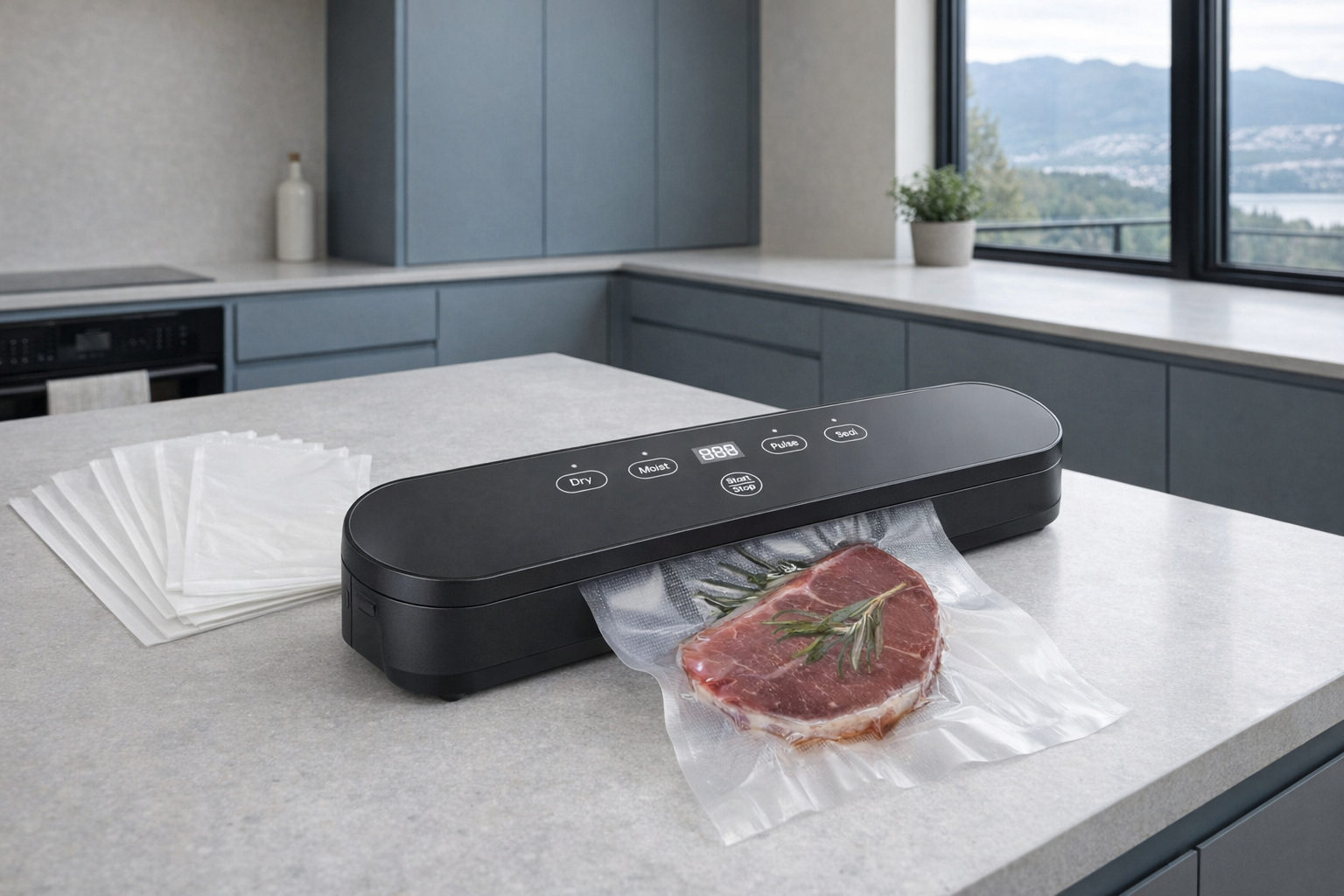
In plain English, this is a compact countertop machine that removes air from a textured plastic bag and then heat-seals the open edge shut. The point is simple: less air exposure generally means better freezer storage, slower spoilage for some foods, and less mess when portioning meals ahead of time. The digital display and touchscreen are there to make mode selection a little clearer than the absolute cheapest one-button units.
Automatic food vacuum sealer with digital display, 75kPa suction power, 4 smart modes (Dry, Moist, Pulse, Seal), compact design with touchscreen operation. Includes 20 vacuum bags. Airtight seals in under 30 seconds with built-in overheat protection.
That feature set places it in the same broad category as entry-level sealers from FoodSaver, which is probably the most recognizable name in this space. The difference is that FoodSaver machines often cost noticeably more and may come with broader accessory ecosystems, while the GJX looks aimed at the budget buyer who wants the core function — vacuum, then seal — without paying for a premium brand badge. That is a more honest proposition than many kitchen gadgets: do one job, keep the price low, and stay small enough to tuck into a cabinet.
Key features at a glance
- 75kPa suction power for pulling air out of compatible vacuum bags
- 4 smart modes: Dry, Moist, Pulse, and Seal
- One-touch automatic vacuum-to-seal operation
- Digital display and touchscreen controls
- Compact design that should store more easily than bulkier countertop units
- Includes 20 vacuum bags
- Built-in overheat protection
- 1-year warranty according to the listing
How the GJX Vacuum Sealer Automatic with Digital Display actually works
Like most edge-style vacuum sealers, the GJX works by clamping the open end of a specially textured plastic bag into the machine. When you start a vacuum cycle, it pulls air out through that bag opening. Once enough air is removed, a heating strip melts the inner layers of the plastic together to create the seal. That seal is the whole point: if the seam is weak, the bag slowly leaks air back in and the benefit drops off quickly.
The 75kPa figure matters because it gives at least some clue about the machine's pull strength. On a budget sealer, that is a respectable-looking number on paper. It does not tell you everything — real-world performance depends on bag quality, moisture management, and how consistently the sealing bar works — but it suggests this is not just a token suction pump. For normal freezer portions of chicken breasts, ground beef, shredded cheese, or chopped vegetables, that should be enough pressure to create a visibly tighter package than a zipper bag.
The four modes are where the machine becomes more useful than a basic one-setting sealer:
- Dry mode is the standard option for foods without much free liquid — nuts, bread portions, coffee beans, dry snacks, hard cheeses, or cooked grains that have cooled.
- Moist mode is there for foods that release some liquid, such as marinated meats or juicier leftovers. Usually, this changes the timing so sealing happens before moisture is sucked too far into the machine.
- Pulse mode gives you more manual control. That matters for soft foods like berries, pastries, or delicate fish, where full automatic suction can crush the contents.
- Seal mode is useful when you just want to close a bag without vacuuming it, or create a custom-sized bag from roll material if the machine supports compatible bag stock.
The listing also says it seals in under 30 seconds and includes overheat protection. Those two details belong together. Heat sealers generate warmth at the strip, and repeated back-to-back use can stress cheaper units. Overheat protection is a good sign because it acknowledges a real limitation of this category. It may pause or shut down temporarily during heavy batch sealing, but that is better than cooking the internals. For a household machine at this price, that is the correct trade-off.
A realistic "day in the life" with GJX Vacuum Sealer Automatic with Digital Display
Because this is an informational explainer rather than a hands-on test, here is what a typical use pattern might look like based on the listed features and how machines like this are usually used.
- Morning. You split a family-pack of chicken into smaller freezer portions after a grocery run. Dry or Moist mode handles the difference between plain cuts and marinated pieces, and the automatic vacuum-to-seal cycle keeps the process simple when you are doing several bags in a row.
- Midday. Leftover shredded cheese, half a block of cheddar, or coffee beans get sealed for the fridge or pantry. These are exactly the kinds of foods where less air exposure can make a visible difference, and the compact body means the machine can come out briefly and go back in the cabinet without taking over the counter.
- Afternoon. You portion soup ingredients or batch-cooked rice for meal prep. If something is soft or easily squashed, Pulse mode gives you a bit more control than a full automatic suction cycle.
- Evening. Before putting the machine away, you use plain Seal mode to close a bag quickly or prep one extra bag for the freezer. If you have been running a lot of cycles, the built-in overheat protection may be the thing that stops you from pushing a low-cost sealer harder than it was built for.
Who the GJX Vacuum Sealer Automatic with Digital Display is actually for (and who it isn't)
Great fits
- Bulk grocery shoppers who buy family packs of meat at warehouse stores and want to split them into smaller freezer portions the same day.
- Meal preppers who cook once or twice a week and want neater, flatter, more stackable freezer packs than standard storage containers.
- Small-kitchen households that want a compact machine they can store easily instead of leaving permanently on the counter.
- People tired of freezer burn on cheese, cooked proteins, bread, or expensive leftovers they meant to eat later.
- Budget-conscious first-time buyers who want to try vacuum sealing without spending FoodSaver money upfront.
Poor fits
- Serious sous-vide enthusiasts who seal constantly and may be better served by a sturdier machine with broader bag and accessory support.
- Anyone regularly sealing very wet foods like soups, stews, or heavily marinated items unless they are comfortable freezing first or working carefully with moisture.
- Shoppers who dislike recurring consumables because vacuum sealers are only useful if you keep the right bags on hand.
- People expecting set-and-forget industrial durability from a machine in the $44 CAD range.
- Households that rarely freeze food or buy in bulk, because the machine only saves money if it prevents waste or supports habits you already have.
Practical trade-offs
Bag dependency and ongoing cost
The price of the machine is only part of the story. Vacuum sealers depend on compatible bags, and those bags cost more than regular storage bags. The inclusion of 20 vacuum bags is useful because it lets you start immediately, but it is also a reminder that this is a consumables category. If you seal food often, the long-term cost lives in the bags, not the appliance.
That does not make it a bad buy. It just means you should evaluate it like a printer or coffee machine: the entry price is low, but the system works only if you are willing to restock supplies.
Moisture handling
The presence of Moist mode is good, but budget edge sealers still tend to be happiest with relatively dry foods. Liquid is the enemy of a clean vacuum seal because it can get pulled toward the sealing area, weaken the seam, or dirty the machine. For raw marinated meats, juicy fruit, or leftovers with sauce, some prep usually helps — blotting, chilling, or partially freezing first.
That is not a flaw unique to GJX. It is a category reality. Chamber sealers handle liquids much better, but they are much larger and much more expensive. At this price, it is fairer to think of this machine as a solid dry-food and lightly moist-food tool.
Throughput and durability
The listing's mention of built-in overheat protection suggests this is intended for household bursts, not nonstop batch processing. If you are sealing six or eight portions after one grocery trip, that is probably the right use case. If you are trying to process dozens of bags in one session every weekend, you may hit cooldown pauses or just outgrow the machine.
The compact design is part of the same trade-off. Smaller machines are easier to store, but they are not usually the most robust. For many kitchens, that is still the better choice. A vacuum sealer that fits in a cabinet and gets used beats a larger one that feels too annoying to pull out.
Where the GJX Vacuum Sealer Automatic with Digital Display fits in a modern kitchen
This machine makes the most sense as part of a broader food-storage routine, not as a miracle appliance on its own. In a normal kitchen, it works best alongside a few boring companions:
- A chest freezer or freezer drawer for long-term storage of portioned proteins and prepared meals
- Glass food containers for fridge leftovers that you plan to eat soon
- A digital kitchen scale if you portion meals by weight
- A sous-vide stick like the Anova Precision Cooker if you plan to cook sealed proteins in water baths
- Painter's tape or freezer labels so sealed bags actually get dated and identified
That last point matters more than product pages admit. Vacuum sealing unlabeled food just creates mystery bricks in the freezer. The GJX is most useful when it supports habits you already want: buying in bulk, portioning properly, and rotating food instead of forgetting it.
It is also worth saying what this machine is not. It is not a replacement for all food storage. For produce you will eat in two days, a container is easier. For soup, a deli tub is easier. For sandwiches, a zipper bag is easier. Vacuum sealers earn their space when you are storing food for longer, trying to reduce freezer burn, or organizing repeated meal-prep cycles.
The buying decision, in plain terms
Before buying, three questions usually clarify whether this machine makes sense:
- Do you regularly freeze food in portions? If yes, a compact vacuum sealer can be genuinely useful. If not, this may become a once-a-year appliance.
- Are you comfortable buying bags over time? The machine is cheap, but the system depends on consumables. If that already annoys you, skip it.
- Do you mostly seal dry or only slightly moist foods? If yes, this looks like a reasonable fit. If you mainly want to package soups, marinades, and very wet ingredients, you may want a more capable setup.
If you answered yes to the first and third questions — and do not mind the bag cost — the GJX Vacuum Sealer Automatic with Digital Display looks like a sensible budget buy for everyday freezer organization.
Got Questions About the GJX Vacuum Sealer Automatic with Digital Display? Let's Clear Things Up.
Is this a hands-on review?
No. This is an informational explainer based on the listing details, product description, and what machines in this category generally do. It is meant to help you decide whether the feature set matches your kitchen habits, not to replace a full hands-on evaluation.
Does it work for sous-vide cooking?
Potentially, yes, in the basic sense that vacuum-sealed bags are often used for sous-vide. But that does not automatically make it a dedicated sous-vide system. Check bag compatibility and heat suitability on the seller's page, and treat it as a budget sealer first, not a specialist sous-vide machine.
What do the Dry, Moist, Pulse, and Seal modes actually mean?
They are different operating modes for different kinds of food and control needs. Dry is the standard mode, Moist is meant for foods with some liquid, Pulse gives more manual suction control for delicate items, and Seal closes the bag without a full vacuum cycle. On a machine like this, those four modes are useful because they make it more flexible than a one-button sealer.
Is 75kPa suction enough for normal home use?
On paper, yes, 75kPa is a respectable number for a compact household vacuum sealer. It should be enough for everyday tasks like sealing meats, cheese, coffee, and meal-prep portions in textured vacuum bags. The real result still depends on proper bag placement, moisture control, and the quality of the seal.
Does it come with bags?
Yes, according to the listing it includes 20 vacuum bags. That is helpful for getting started right away, especially if this is your first vacuum sealer. Just remember those are starter supplies, not a lifetime stash.
Where can I verify the current specs or buy it?
The best place to confirm the latest price, included accessories, warranty details, and current listing language is the retailer page. For this product, that page is here: Amazon listing for the GJX Vacuum Sealer Automatic with Digital Display.
What does it cost in Canada?
At the time of writing, the listing shows ~$44 CAD. That is very much budget territory for a vacuum sealer, which is why it makes sense to judge it against other entry-level sealers rather than premium FoodSaver models. As always, verify the current price before buying because marketplace pricing moves around.
Where is the Celmin Directory listing for this product?
For a catalog-style view of the same product — structured specs, pros and cons, similar picks, and FAQ — see GJX Vacuum Sealer Automatic with Digital Display on Celmin Directory.
If you're building a smarter home in Canada and want honest explainers on gadgets worth considering — plus the ones worth skipping — Celmin covers the full catalog without the marketing theater. More reviews, comparisons, and buyer guides at https://celmin.ca.
Discussion
Sign up or sign in to join the conversation.