
Walk through the breakfast-appliance corner online and rapid egg cookers look almost absurdly simple: a plastic dome, a heating plate, a tray, and one button. Then the price spread starts. One model asks roughly $42 CAD to do six eggs and throw in poaching trays. Another wants $50 CAD for...
Walk through the breakfast-appliance corner online and rapid egg cookers look almost absurdly simple: a plastic dome, a heating plate, a tray, and one button. Then the price spread starts. One model asks roughly $42 CAD to do six eggs and throw in poaching trays. Another wants $50 CAD for seven eggs, an omelet tray, and a buzzer. Then there are adjacent gadgets like compact rice cookers that are not egg cookers at all, but still sell the same promise: add water, press once, walk away. The marketing tends to blur all of this into “perfect breakfast made easy,” which is a nice slogan and not a useful buying framework.
This isn't a hands-on review. It's an editorial comparison of three one-button breakfast cookers from Celmin's catalog, organized by what they actually do well, what “rapid” really means in practice, and which size or format makes sense for how many people you’re feeding. If you're trying to decide whether an egg cooker is a genuinely useful small appliance or just another single-purpose unit headed for the back of the cupboard, this is the honest version of that conversation.
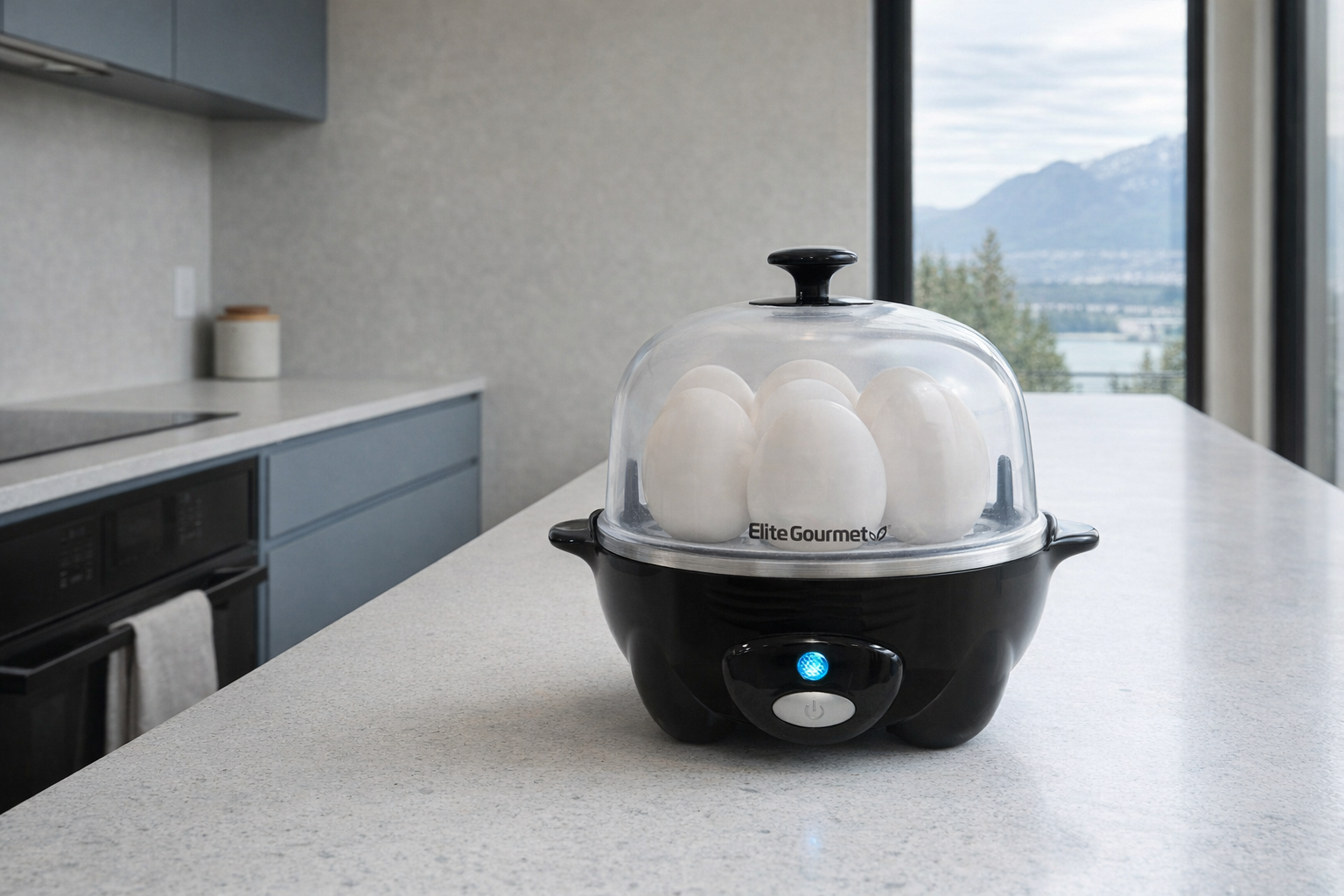
Quick comparison
| Product | Price (CAD) | Capacity | Best for |
|---|---|---|---|
| Elite Gourmet Rapid Egg Cooker 7 Eggs | ~$50 | Up to 7 eggs | Most households, best all-around egg-cooker fit |
| Evoloop Rapid Egg Cooker Electric 6 Eggs | ~$42 | Up to 6 eggs | Small kitchens, dorms, slightly lower spend |
| Rice Robot Personal Rice Cooker PFAS-free | ~$50 | 1.2 L | People who want one-button steaming, but not mainly eggs |
Pro tip: Buy a rapid egg cooker for repeatability and less babysitting, not because it’s dramatically faster than a pot on the stove. The real win is that you stop hovering, not that breakfast suddenly happens in 90 seconds.
What a "rapid egg cooker" actually adds (and what it doesn't)
The basic mechanism is less magical than the packaging suggests. A rapid egg cooker works by heating a measured amount of water into steam under a lid. That water amount is the whole trick. According to the included measuring systems these products use, more water generally means a longer steam cycle for softer or medium outcomes, while less water typically runs the cooker toward a firmer finish based on the manufacturer’s markings. In other words, “soft,” “medium,” and “hard” are not smart sensors reading the egg in real time. They’re water-volume recipes.
That still makes these appliances useful. On a stovetop, hard-boiling eggs usually means waiting for a pot, tracking a timer, and then deciding whether you’re shocking them in cold water or not. A rapid cooker compresses that into add water, load tray, press the button, wait for the alarm. Realistically, the appeal is often a roughly 6–10 minute steam cycle versus something closer to 12–15 minutes end-to-end on the stove once you count heating the pot and managing it. That’s a decent improvement, but not an earth-shattering one.
The second thing these machines add is format flexibility. The good ones are not just “egg boilers.” They tend to include a poaching tray, sometimes two, plus an omelet tray. That matters because a single-purpose shell-on egg boiler is a harder sell in a small kitchen than a breakfast gadget that can handle boiled eggs one morning, poached eggs the next, and a quick steamed omelet when you’re tired.
What they do not add is zero cleanup. The heating plate still ends up with the usual mineral ring from evaporated water, especially if your tap water is hard. And if you use the omelet or poaching trays, cleanup reality is what you’d expect from egg: a little yolk film, a little cooked-on residue around the edges, and some wiping unless the removable parts go straight into the dishwasher. These are simple appliances, not self-cleaning ones.
The last honest point: capacity matters more than almost every extra accessory. Six or seven eggs sounds similar on paper, and it is. For one or two people, either is plenty. For meal prep, family breakfasts, or households where eggs show up several times a week, that one extra slot can be the difference between “one cycle and done” and “run it again.”
The 3 products, ranked by what they actually do well
Elite Gourmet Rapid Egg Cooker 7 Eggs — the most honest pick for most kitchens
At roughly $50 CAD, the Elite Gourmet Rapid Egg Cooker 7 Eggs lands in the sweet spot for this category: not dirt cheap, not bloated with nonsense, and sized for actual households rather than just one person in a dorm. According to the listing, it cooks up to 7 eggs to soft, medium, or hard-boiled firmness, and includes the extras people actually use: a poaching tray, an omelet tray, and a measuring cup with firmness markings. It also adds auto shut-off and a buzzer alarm, which is exactly what this kind of appliance should have. If the whole point is freeing you from watching a pot, a unit without a clear end signal is missing the point.
What makes the Elite Gourmet the anchor pick is not that it sounds futuristic. It’s that it seems to understand the category properly. The promise here is controlled, repeatable steaming with fewer moving parts for the user. The 4.5/5 rating on the source listing suggests people broadly get what they came for. Seven eggs is enough for a couple making breakfast, enough for a few salad eggs for the fridge, and enough to feel useful without getting bulky. That’s a more honest design than appliances that try to justify themselves with inflated “multifunction” language. The included dishwasher-safe removable parts also matter, because egg cookers become annoying fast if the trays feel fiddly to clean.
A realistic tradeoff is that this is still a single-breakfast-type machine. If you don't eat eggs often, no accessory bundle changes that. But if eggs are part of your normal week, the Elite Gourmet looks like the most balanced version of the idea.
📺 Watch: Elite Gourmet Rapid Egg Cooker explained
- Best for: One- to three-person households, repeat breakfast use, and anyone who wants the simplest “add water and walk away” egg setup.
- Full explainer: Elite Gourmet Rapid Egg Cooker 7 Eggs on Celmin · Directory: product page
Evoloop Rapid Egg Cooker Electric 6 Eggs — the compact budget-aware alternative
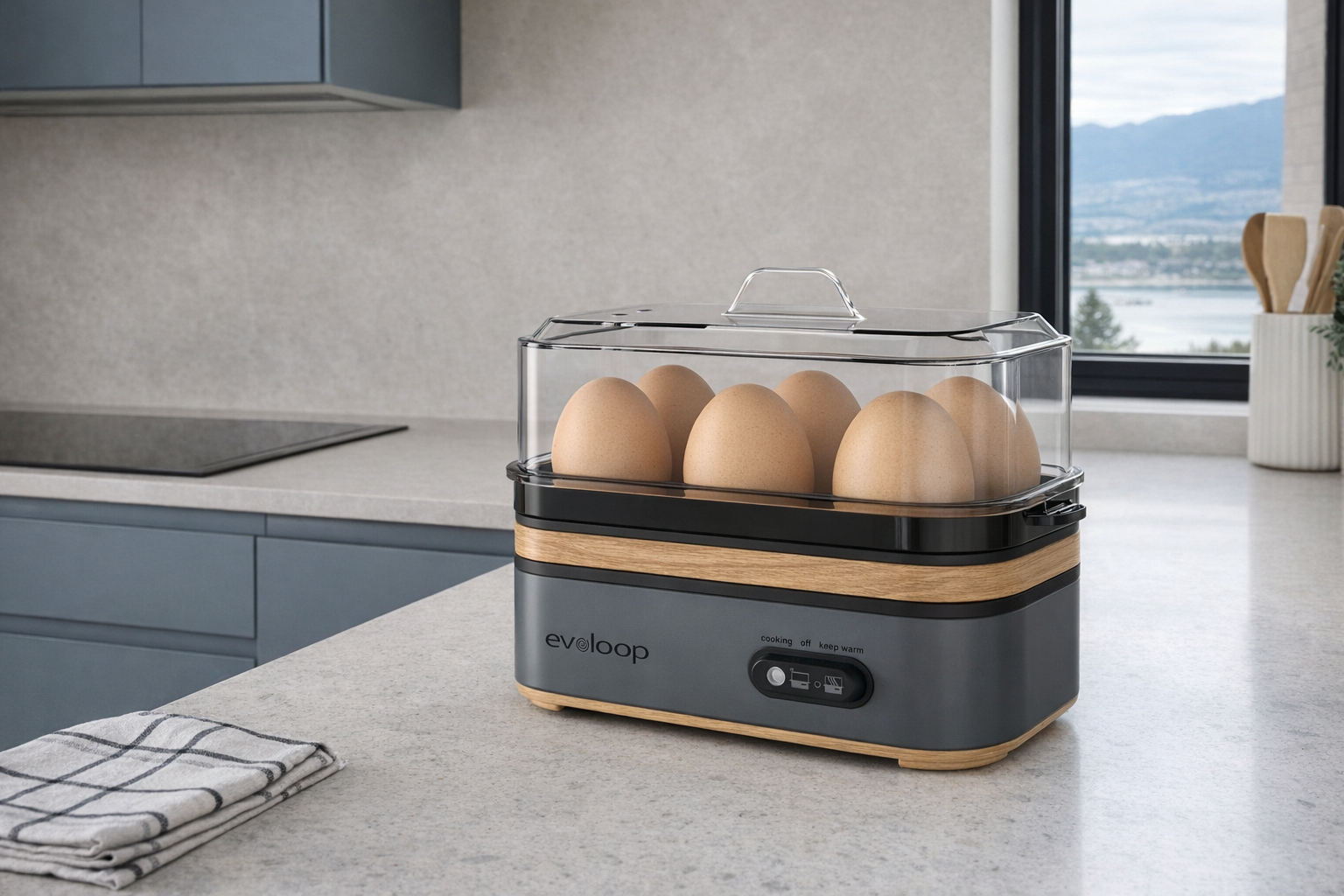
The Evoloop Rapid Egg Cooker Electric 6 Eggs comes in a little lower at about $42 CAD, and on paper it covers nearly the same ground as the Elite Gourmet. It handles up to 6 eggs in soft, medium, or hard-boiled styles, and includes two poaching trays, an omelet tray, and a measuring cup with a hole puncher. It also has auto shut-off with a buzzer, which keeps it in the genuinely useful tier rather than the “cheap enough to be tempting, annoying enough to regret” tier.
Its clearest advantage is footprint. The listing calls out a compact 7.6 x 5.6 inch design, and that matters more than brands usually admit. Egg cookers live or die on whether they’re easy to leave out or easy to stash. In a small apartment kitchen, dorm, or secondary setup, a compact body is not a minor spec; it’s the difference between being used and being forgotten. The 4.5/5 rating also suggests it’s delivering the basics well enough that people aren’t treating it like a compromise purchase. Where I’d be a little skeptical is the practical gap between 6 and 7 eggs: it’s small, but real. If you’re already spending in the low-forties, paying a bit more for that extra slot can make the appliance feel less cramped over time.
That said, the Evoloop is the more sensible choice for buyers who know they’re shopping for compactness first and maximum capacity second. It looks like the classic “good enough, smaller, cheaper” version of the category—and sometimes that’s exactly the right buy.
- Best for: Solo users, couples, dorms, and kitchens where countertop space is tighter than the budget.
- Full explainer: Evoloop Rapid Egg Cooker Electric 6 Eggs on Celmin · Directory: product page
Rice Robot Personal Rice Cooker PFAS-free — not an egg cooker, but the same one-button logic
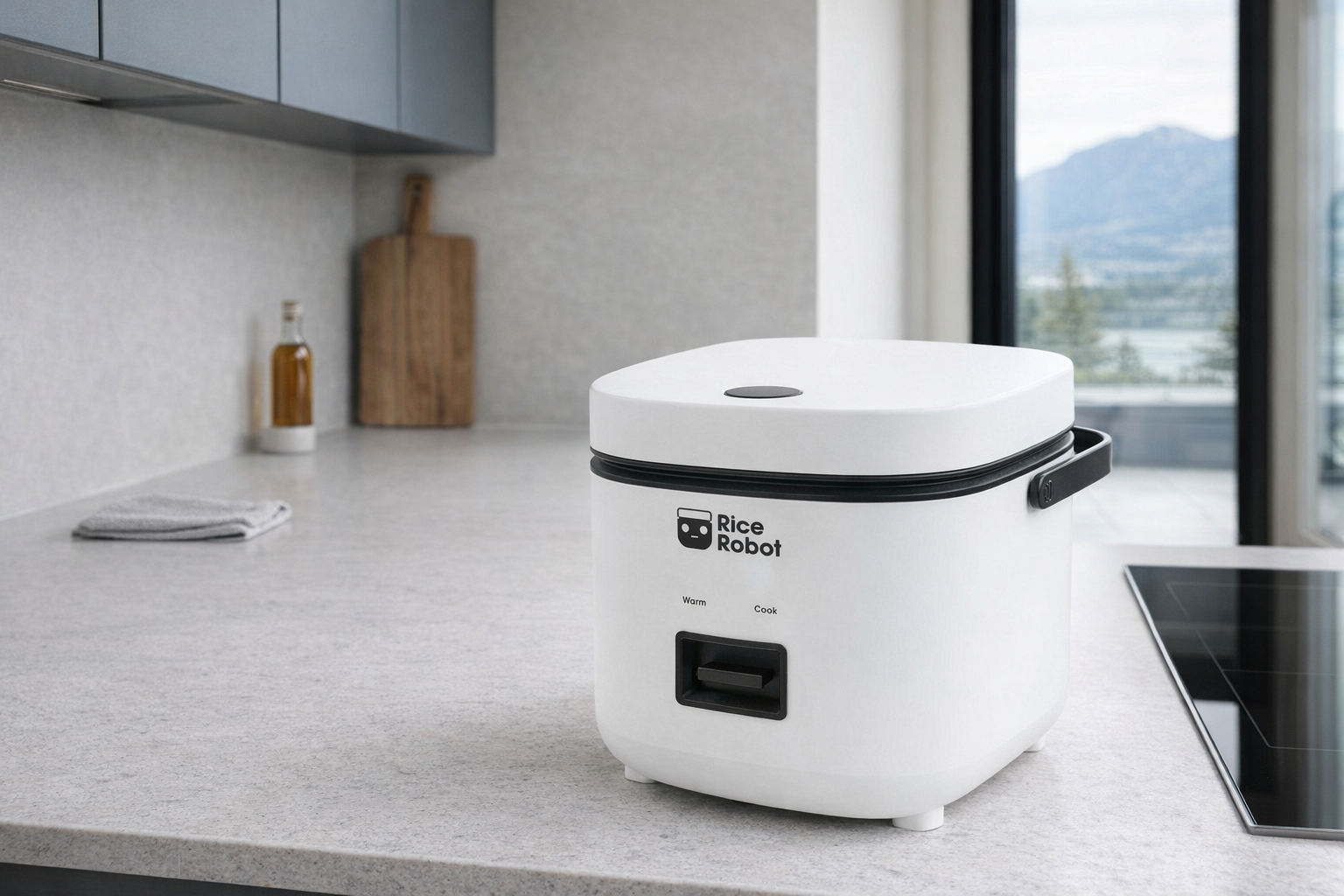
The Rice Robot Personal Rice Cooker PFAS-free is the outlier here, and it belongs in this guide only if you understand what it is not. At about $50 CAD, it is not a dedicated rapid egg cooker. It’s a 1.2 liter personal rice cooker with click and cooking technology, a PFAS-free ceramic non-stick surface, and an automatic stop when the rice is ready. It also includes a stainless steel steamer tray, measuring cups, a recipe book with 60 recipes, and a serving spoon. So why include it? Because it sits in the same broader “one-button steam breakfast and small-meal appliance” category, and some people considering an egg cooker would actually be better served by something like this.
If your real goal is not “I need boiled eggs specifically,” but “I want a compact set-it-and-forget-it cooker for a small kitchen,” the Rice Robot may be the smarter way to spend the same ~$50 CAD. Rice, grains, and simple steamed foods are a broader use case than eggs alone. The 4.2/5 rating is a little softer than the dedicated egg cookers here, which is not shocking: the more jobs a compact cooker tries to cover, the more expectations it has to meet. The PFAS-free angle is also more substantively interesting than most countertop-appliance buzzwords, because it speaks to the coating rather than some vague convenience claim. Still, it should not be bought by someone mainly wanting easy peeled boiled eggs. A rice cooker with a steamer tray is adjacent to an egg cooker, not a replacement in any precise sense.
The honest read is simple: if your breakfast routine is egg-heavy, buy an egg cooker. If your apartment kitchen needs one small, flexible cooker and eggs are only part of the story, this is the more versatile detour.
- Best for: Apartment dwellers, dorms, RVs, and buyers who want one-button steaming convenience beyond eggs.
- Full explainer: Rice Robot Personal Rice Cooker PFAS-free on Celmin · Directory: product page
The three questions worth asking before you buy
- How many eggs do you realistically need in one batch?
If the answer is “two for me” or “four for two people,” the Evoloop Rapid Egg Cooker Electric 6 Eggs is already enough. If you meal prep, make egg salad, or often cook for more than one person, the Elite Gourmet Rapid Egg Cooker 7 Eggs is the more forgiving size. - Do you want a dedicated egg machine, or a broader one-button cooker?
If you specifically want easy soft-, medium-, or hard-boiled eggs with poaching and omelet options, stay with the Elite Gourmet or Evoloop. If what you actually want is compact, low-attention cooking more generally, the Rice Robot Personal Rice Cooker PFAS-free may fit your kitchen better. - Are you buying for speed, or for less hassle?
If you're hoping for a dramatic time collapse, temper expectations: these are often faster than stovetop boiling, but not wildly so. If you want fewer steps, more repeatability, and an alarm that tells you breakfast is done, the Elite Gourmet Rapid Egg Cooker 7 Eggs is the strongest all-around answer.
Where each one genuinely fits
| If this sounds like your kitchen... | ...buy this |
|---|---|
| You want the most balanced dedicated egg cooker for regular use | Elite Gourmet Rapid Egg Cooker 7 Eggs (~$50) |
| You want a smaller, cheaper egg cooker that still covers the basics well | Evoloop Rapid Egg Cooker Electric 6 Eggs (~$42) |
| You don’t mainly need boiled eggs — you need a compact one-button cooker with broader use | Rice Robot Personal Rice Cooker PFAS-free (~$50) |
| Couple household that eats eggs several mornings a week | Elite Gourmet Rapid Egg Cooker 7 Eggs |
| Dorm, apartment, or tiny kitchen where footprint matters most | Evoloop Rapid Egg Cooker Electric 6 Eggs |
| You’re choosing between “single-purpose egg gadget” and “more flexible steamer/rice setup” | Rice Robot Personal Rice Cooker PFAS-free |
Got Questions About Rapid Egg Cookers? Let's Clear Things Up.
Is this a hands-on review?
No. This is an editorial comparison based on each product’s listed features, pricing, and category logic. It’s meant to help you choose the right type and size of cooker, not to stand in for side-by-side lab testing.
How do rapid egg cookers actually know whether an egg is soft, medium, or hard boiled?
They generally don’t “know” in a sensor-driven way. According to the listings, they use a measuring cup with firmness markings, which means doneness is controlled by the amount of water you add for the steam cycle. That’s a simple system, but it’s also why these devices can be pleasantly consistent once you learn the markings.
Are they really faster than boiling eggs on the stove?
Usually, yes, but the gap is modest rather than dramatic. A realistic expectation is something like 6–10 minutes for the cooker cycle versus around 12–15 minutes total on the stove once you count getting a pot of water going and watching it. The bigger advantage is convenience: one button, auto shut-off, and a buzzer instead of managing a burner.
Are rapid egg cookers easier to clean than using a pot?
Somewhat, but don’t expect zero mess. The heating plate can develop a water ring or mineral residue, and poaching or omelet trays can leave behind a bit of cooked egg that needs rinsing or dishwashing. The removable, dishwasher-safe parts on the Elite Gourmet Rapid Egg Cooker 7 Eggs make that reality easier to live with.
Is a 6-egg cooker enough, or should I get 7 eggs?
For a solo user or a couple, 6 eggs is already generous. The jump to 7 eggs sounds trivial, but it’s useful if you batch-cook, feed more than two people, or want one cycle to cover breakfast plus a few leftovers. That’s why the Elite Gourmet is the more future-proof pick, even if the Evoloop is the tighter-value option.
Is the Rice Robot a substitute for a rapid egg cooker?
Not really, at least not if your main goal is boiled eggs. The Rice Robot Personal Rice Cooker PFAS-free is better understood as a compact, one-button cooker with steaming capability and broader meal flexibility. It belongs in this conversation because some buyers want the convenience philosophy more than the egg-specific format.
Where should I buy these to verify the latest details?
Before ordering, check the current retailer page for updated pricing, accessory lists, and any spec changes. Quick links: Elite Gourmet Rapid Egg Cooker 7 Eggs · Evoloop Rapid Egg Cooker Electric 6 Eggs · Rice Robot Personal Rice Cooker PFAS-free. Prices and bundle contents can shift, especially across Amazon Canada and US listings.
Which one would Celmin pick?
For most households, the Elite Gourmet Rapid Egg Cooker 7 Eggs is the cleanest recommendation. It hits the right combination of ~$50 CAD pricing, 7-egg capacity, useful included trays, and the basic features that actually matter: auto shut-off, a buzzer, and a measuring system built around repeatable doneness. If you’re trying to spend less and save a little space, the Evoloop is the obvious step down without looking like a bad compromise.
If you're building a smarter home in Canada and want honest comparisons of gadgets worth considering — plus the ones worth skipping — Celmin covers the full catalog without the marketing theater. More comparisons, reviews, and buyer guides at https://celmin.ca.
Discussion
Sign up or sign in to join the conversation.