
A practical guide to window ratings, solar gain, installation and ventilation for Canadian homeowners.
Everyone has that spot in their home. The one where the air stays just a bit too cold, no matter how high you set the thermostat. And windows are a common culprit.
Natural Resources Canada (NRCan) says windows, doors, and skylights combined can account for up to 35% of a home's total heat loss. Single-glazed windows lose about 10 to 20 times as much heat as a properly insulated wall of the same area.
It’s easy to dismiss a single window repair or update, but when the temperatures fall, you’ll notice that heat loss in both your comfort and your bills.
For Vancouver homeowners, Ecoline’s “vinyl windows vancouver” page provides a starting point for exploring local options.
What’s the solution?
How much you gain depends on what your home currently has installed. BC Housing’s consumer guide says replacing older single-glazed, aluminum-framed windows with energy-efficient products can reduce heating energy consumption by as much as 30 to 40%.
Note that this is an upper estimate for that specific scenario, so it’s not a typical result. The savings you see will depend on factors such as your climate, your existing windows, and the specifications of any replacements.
But the switch depends on choosing the right window type. A good starting point is ENERGY STAR-certified windows. Then you can look closely at each model’s ratings.
Here’s a bit more on what to look for, including:
- Comparing whole-window ratings rather than glass-only numbers
- How to check for air leakage
- Matching solar gain to each side of your home
- How to treat installation and ventilation as part of your window purchase
What do the numbers on a window label mean?
A common question homeowners ask involves window label ratings. They can seem too technical to tell you what kind of window you’re looking at.
But once you know the most important numbers to look for (and what each means), you’ll get a better idea of whether or not a window is ENERGY STAR certified in Canada:
| Rating | What it tells you | Standard ENERGY STAR (Version 5.0) | ENERGY STAR Most Efficient (2025 designation) |
|---|---|---|---|
| U-factor (W/m²·K) | Heat escaping through the window. Lower is better. | 1.22 or lower | 1.05 or lower |
| Energy Rating (ER, no units) | Heat loss balanced against solar gain. Higher is better. | 34 or higher | 40 or higher |
| Air leakage (L/s/m²) | Drafts at the joints. Lower is better. | 1.5 or lower | Same ENERGY STAR air-leakage requirement applies. |
A window qualifies as ENERGY STAR certified by meeting either the U-factor or the ER minimum, plus the air leakage limit.
What’s the main difference between Standard and Most Efficient? The Most Efficient designation is a separate, annual recognition for ENERGY STAR-certified windows that meet stricter criteria.
A window qualifies by meeting either the U-factor or the ER criterion in the table, not both, and the same ENERGY STAR air leakage limit applies. The figures above come from the 2025 designation, so always confirm the current year’s criteria.
ENERGY STAR works as one national standard, and it’s typically the minimum your home should aim for. If you live in a long-winter region, it’s best to treat it as a starting point in your window shopping.
If you live in a milder climate (such as the coast), a certified level may be all you need, as your money is often better spent on installation and ventilation.
Glass-only vs whole-window numbers
A glass-only rating leaves out the frame and edges of a window, which can make the product look more efficient than it truly is.
A whole-window number offers a much closer idea of the window’s true efficiency, and shows why proper installation and ventilation are just as important as the window itself.
If you find that a quote cites only the glass number, you’re likely only seeing the best case. Ask for whole-window figures as well – which can often be found on the window’s certification label.
Don’t forget to take note of the frames as well. Vinyl and fibreglass frames have chambers inside that can be foam-filled for better insulation, so if you are comparing vinyl or fibreglass models, ask how many chambers the frame has and whether they are foam-filled.
What about solar heat gain (SHGC)?
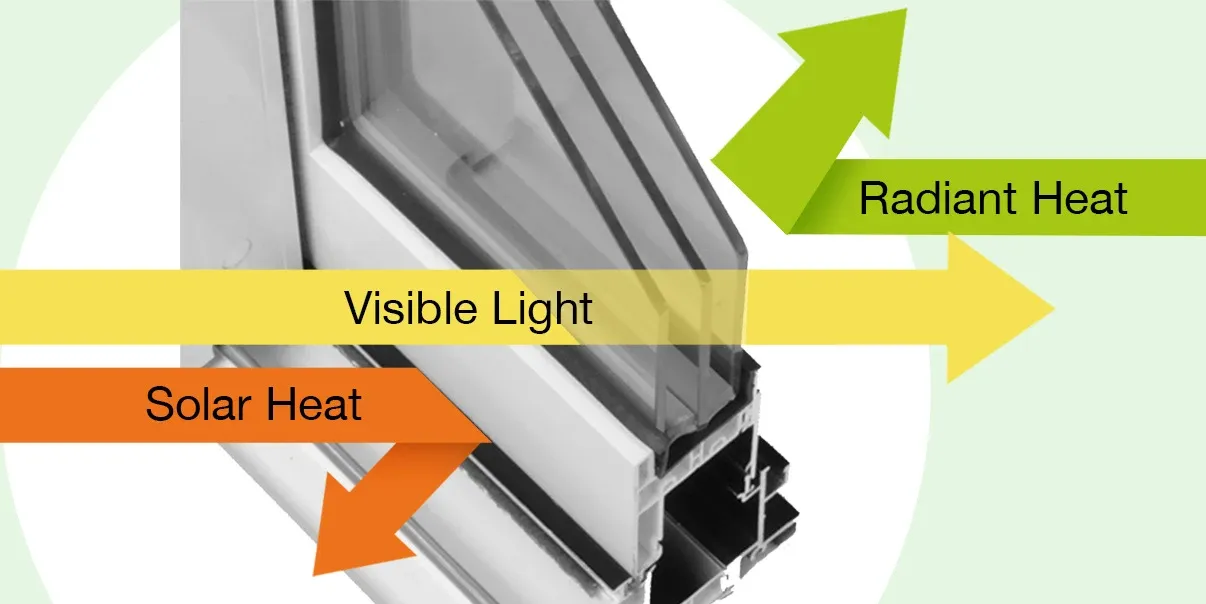
Every window allows light in from the sun, and that sunlight has its own amount of heat that is transferred through the pane and into the home.
Most windows include a rating for solar heat gain (SHGC), which estimates how much of the sun’s natural heat passes through a window. For new or well-insulated homes, an SHGC of 0.3 to 0.4 is a common target.
One key consideration is orientation, which changes how much solar gain you want:
- A window that gets strong winter sun can act as a free heat source in a cold climate, so a higher SHGC (above 0.4) can make sense there.
- A window exposed to strong summer sun, such as one facing west, can work the other way: the heat that helps in January can overheat the room in July, so a lower SHGC and outside shading from awnings or trees may matter more.
No single rule fits every home, so weigh your climate, how much shade each side of the house gets, and whether your rooms overheat in summer before choosing a rating for each wall.
Is my energy loss really due to the window I have installed?
Before you spend anything on replacing or updating your windows, it’s wise to spend a bit of time determining the true source of your energy loss. You could have air leakage around the window’s frame, or leaks in the walls or roof.
- Air leaks: check for drafts around the window frame, along the seals, and at all movable joints.
- Water leaks: water that gets in around a window is often blamed on the nearest window or door. But it can also come from the installation, flashing, or drainage at the window-wall interface. Sometimes, it even comes from the roof. If you see staining, soft trim, or damp drywall, have the installation investigated before you replace anything.
A good rule of thumb when buying new windows: a brand new window can’t fix a leak that starts somewhere else!
Why are my windows wet?
Do you find that your window seems fogged up or beaded with moisture on the inside, particularly first thing in the morning?
Early morning condensation on windows is one of the most common window complaints, and newer, more efficient windows can help prevent this by keeping the inside surface warmer. The only catch is that a tighter window allows less air to escape, as well as the moisture that goes with it.
BC Housing notes that greater airtightness can increase condensation if the existing ventilation is not adequate. Before you replace a window, check that any bathroom fans or kitchen hood vents are working properly.
Don’t hesitate to ask your installer how the new windows may affect your home's overall ventilation, and whether you should consider other sources of moisture beyond the window itself.
A tighter home can also change how fuel-burning appliances vent. BC Housing notes that improved airtightness can increase the risk of back-drafting from combustion appliances such as gas stoves and fireplaces.
If you have gas appliances or a fuel-burning fireplace, have a qualified professional assess your ventilation and combustion safety when you upgrade your windows.
On that note, don’t forget to install (or check) working carbon monoxide alarms. Carbon monoxide alarms are a basic safety measure for any home that uses fuel-burning appliances, whether or not you replace your windows.
But remember: a carbon monoxide alarm does not replace proper ventilation.
Why does window installation matter so much in my choice?
The reality is that even a top-rated window, installed badly, will leak air and become inefficient.
That’s why the installation method matters as much as the window product itself. Poor installations can cause cold drafts even in the most efficient window, and the goal should be a continuous air barrier around the entire frame.
When getting quotes, ask for references from past installation customers and how the installer seals and flashes the windows during installation. Ask them what happens if they find moisture damage behind the old frame and their guidance on next steps.
A good installer should be able to walk you through the window specifications they recommend for your home. They should also explain the installation method they use and what the warranty covers.

What should you ask about on your next window quote?
When you pull all of this information together, you’ll start to see why looking beyond an “efficient” label is important. Before you buy, make sure to ask the following questions for each quote:
- What is the window’s whole-window U-factor and ER, and can it be seen on the certification label?
- What is the ENERGY STAR status, and does this model reach the Most Efficient tier?
- What is the window’s air leakage rating and SHGC for each side of the home?
- How is the window’s frame built? Are the chambers of the window foam-filled?
- What is the entire installation plan, and does it include sealing, flashing, ventilation advice, references, and warranty coverage?
- Can you give me an itemised price for comparison with different quotes?
Ready to upgrade your windows?
Once you have your quotes, compare the whole-window U-factor and ER, air leakage rating, SHGC for each side of your home, and installation plan side by side.
When you’re ready to compare quotes, ask each supplier, including Ecoline Windows, to put those figures in writing so the quotes line up.
Rebate programs for windows and doors vary by region and can change often, so always confirm eligibility with your local utility or provincial program before you buy.
Sign up or sign in to join the conversation.