
Every smart home needs a brain. The hub is what connects your lights, locks, cameras, and sensors into a unified system. But choosing the wrong hub locks you into an ecosystem that might not support the devices you want.
Every smart home needs a brain. The hub is what connects your lights, locks, cameras, and sensors into a unified system. But choosing the wrong hub locks you into an ecosystem that might not support the devices you want.
In 2026, the landscape has shifted. Matter is bridging ecosystems, but platform choice still matters for voice control, automations, and daily experience. Here's how the major smart home hubs compare for Canadian homes.

The Contenders
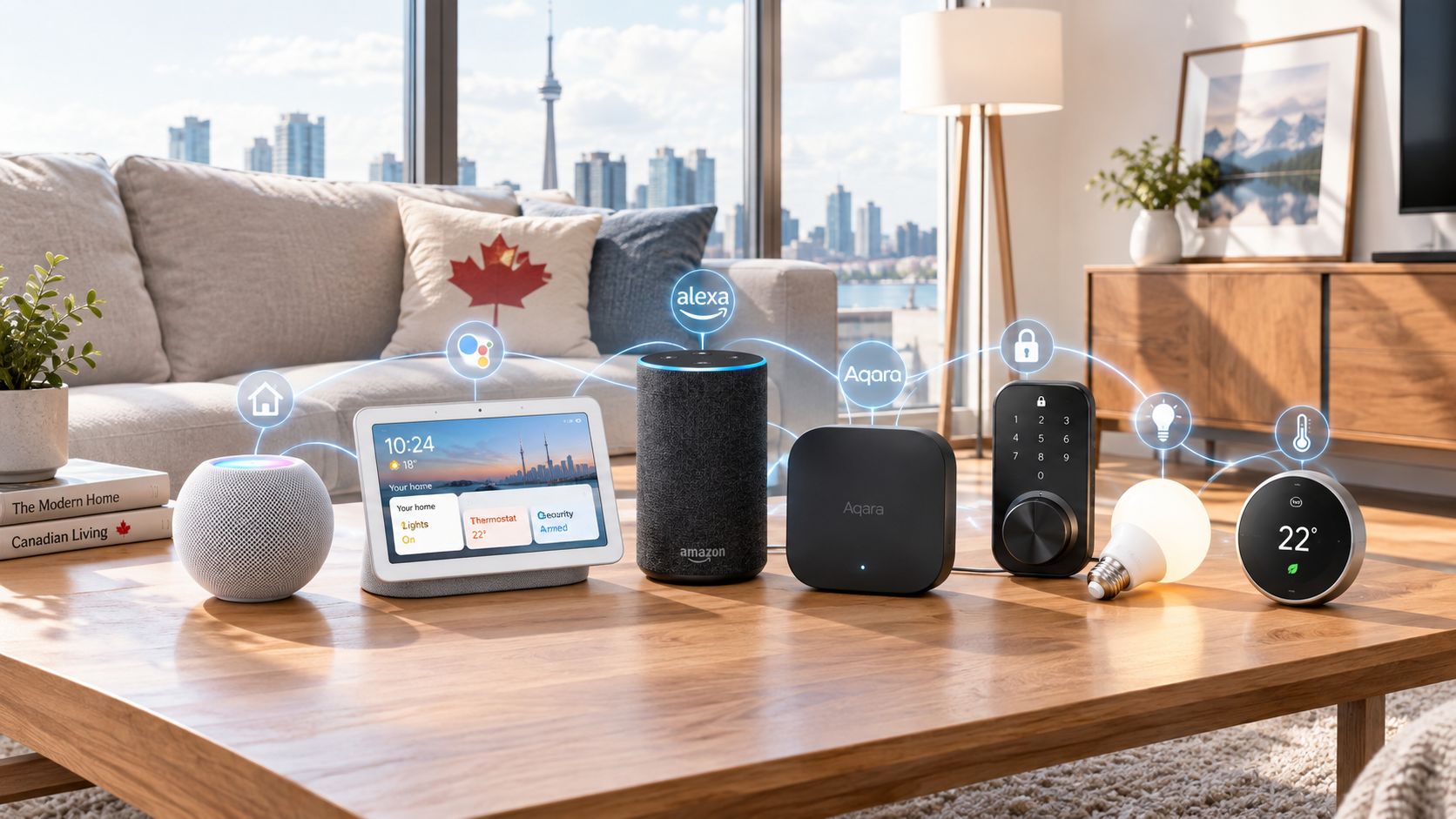
| Hub | Protocol | Voice Assistant | Matter | Thread | Price |
|---|---|---|---|---|---|
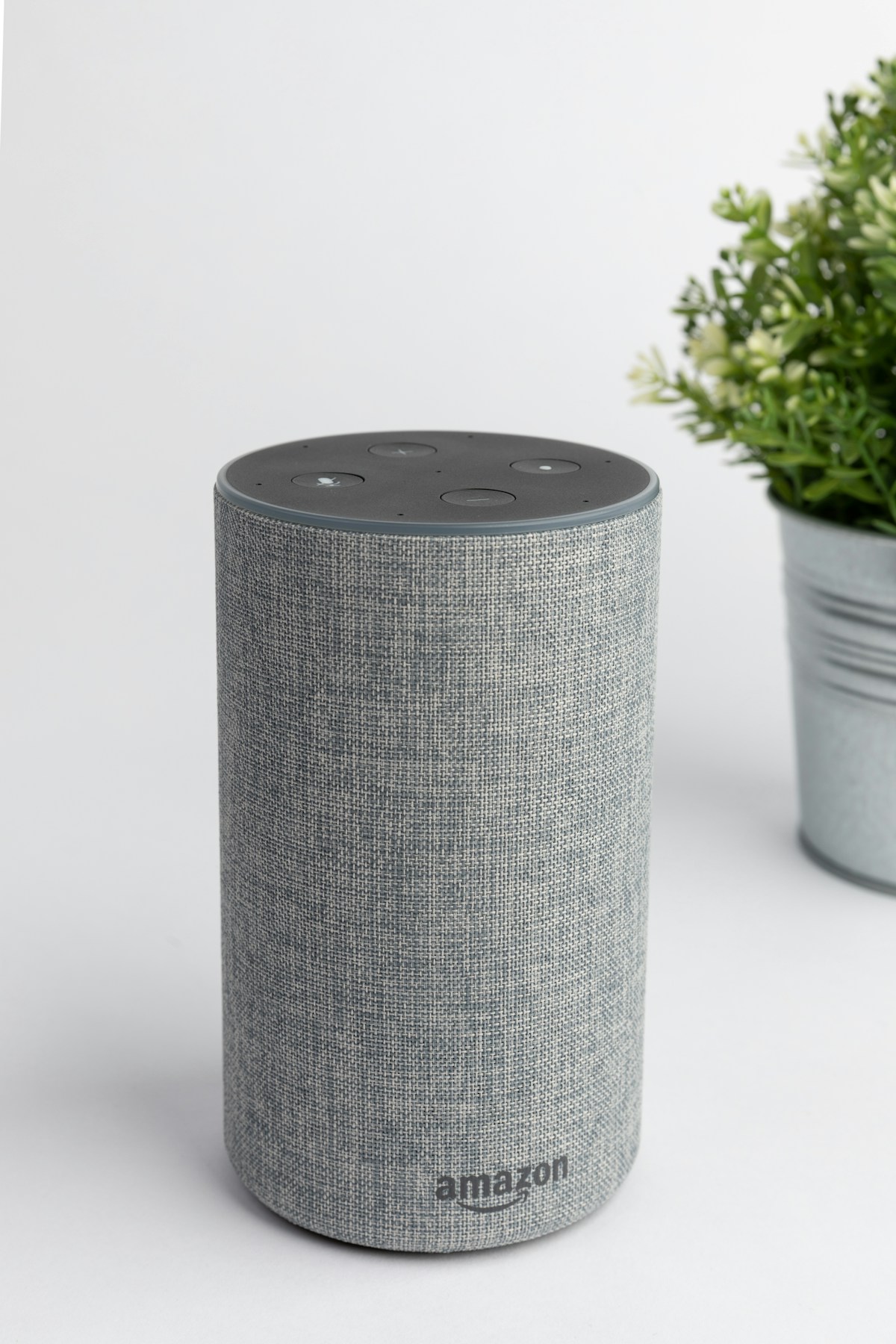
| Amazon Echo (4th Gen) | Zigbee, WiFi, Matter, Thread | Alexa | Yes | Yes | ~$130 CAD |
| Amazon Echo Hub | Zigbee, WiFi, Matter, Thread | Alexa | Yes | Yes | ~$179 CAD |
| Google Nest Hub Max | WiFi, Matter, Thread | Google Assistant | Yes | Yes | ~$315 CAD |
| Apple HomePod mini | WiFi, Matter, Thread | Siri | Yes | Yes | ~$129 CAD |
| Apple HomePod (2nd Gen) | WiFi, Matter, Thread | Siri | Yes | Yes | ~$299 CAD |
| Aqara Hub M3 | Zigbee, WiFi, Matter, Thread, IR | Alexa, Google, Siri | Yes | Yes | ~$95 CAD |
| SmartThings Hub | Zigbee, Z-Wave, WiFi, Matter, Thread | Alexa, Google | Yes | Yes | ~$130 CAD |
Amazon Alexa (Echo)
Strengths
- Widest device compatibility: More smart home devices work with Alexa than any other platform
- Built-in Zigbee hub: The Echo 4th Gen connects directly to Zigbee devices without a separate hub
- Advanced routines: The most powerful automation engine among voice assistants
- Affordable: Echo devices start at $39 CAD (Echo Pop)
- Skills ecosystem: 100,000+ Alexa skills
Weaknesses
- Privacy concerns: Amazon collects voice data (can be managed in settings)
- Ads and suggestions: Alexa occasionally suggests products and services
- Assistant intelligence: Less capable than Google for complex questions
Best For
Canadian homes that want the widest device compatibility and most powerful automations at an affordable price. If you have Ring cameras, Blink devices, or shop on Amazon, Alexa is the natural choice.
Google Home (Nest)
Strengths
- Smartest assistant: Google Assistant answers questions more accurately and handles context better
- YouTube integration: Native YouTube on Nest displays
- Google Photos: Beautiful ambient display on Nest Hub
- Matter and Thread: Full support for future-proof devices
- Chromecast built-in: Cast audio and video from any compatible app
Weaknesses
- Fewer device integrations: Slightly less than Alexa (but closing the gap)
- Simpler routines: Less powerful automation than Alexa
- Limited Zigbee support: No built-in Zigbee hub (relies on WiFi, Matter, Thread)
Best For
Android users, Google Workspace users, and households that value assistant intelligence over automation complexity. Great for bilingual Canadian homes (English/French support).
Apple HomeKit (HomePod)
Strengths
- Best privacy: Audio processed on-device, minimal data collection
- Apple ecosystem integration: Seamless with iPhone, iPad, Mac, Apple Watch, Apple TV
- Home app: Clean, intuitive interface
- Matter support: Expanding device compatibility beyond HomeKit-only devices
- Thread border router: HomePod mini and HomePod 2 both support Thread
Weaknesses
- Siri limitations: Less capable than Alexa and Google for smart home commands
- Fewer native devices: Historically limited device selection (Matter is helping)
- Higher cost: Apple devices are premium-priced
- No display hub: No equivalent to Echo Show or Nest Hub
Best For
Apple households (iPhone, Mac, Apple TV) that prioritize privacy and want a clean, simple smart home experience. Matter support is making HomeKit more viable for diverse device setups.
Aqara Hub M3
Strengths
- Multi-protocol: Zigbee, Matter, Thread, IR control, WiFi—all in one hub
- Works with all platforms: Alexa, Google, HomeKit/Siri
- Local processing: Automations run locally (no cloud dependency)
- IR blaster: Controls legacy devices (AC units, fans, TVs) via infrared
- Affordable: $95 CAD for a multi-protocol hub
Weaknesses
- Aqara ecosystem focus: Best with Aqara sensors and devices
- Setup complexity: More configuration than plug-and-play Echo or Nest
- No voice assistant built in: Needs a separate speaker for voice control
Best For
Tech-savvy users who want maximum protocol support and local control. Excellent as a secondary hub alongside Alexa or Google for Zigbee device management.
Matter: The Great Equalizer
What Matter Changes
Matter is a universal smart home standard supported by Apple, Google, Amazon, and Samsung. A Matter-certified device works with all platforms. This means:
- Buy a Matter light bulb → it works with Alexa, Google, HomeKit, and SmartThings
- Switch platforms without replacing devices
- Less vendor lock-in
What Matter Doesn't Change
- Voice assistant quality (Alexa, Google, Siri still differ)
- Automation capabilities (platform-specific)
- Ecosystem features (Ring works best with Alexa, Nest cameras with Google, etc.)
- Legacy devices (pre-Matter devices still need their original platform)
Decision Framework
| Priority | Best Hub | Why |
|---|---|---|
| Most device compatibility | Amazon Echo | Widest support, Zigbee built-in |
| Smartest voice assistant | Google Nest | Best at answering questions, context |
| Privacy | Apple HomePod | On-device processing, minimal data |
| Advanced automations | Amazon Echo + SmartThings | Most powerful routine engines |
| Multi-protocol flexibility | Aqara Hub M3 | Zigbee, Matter, Thread, IR in one |
| Budget | Amazon Echo Pop | $39 CAD entry point |
| Apple household | Apple HomePod mini | Seamless ecosystem integration |
If you're starting from scratch, the Amazon Echo (4th Gen) at $130 CAD offers the best combination of device compatibility, built-in Zigbee hub, Matter support, and automation power. It's the most versatile starting point for a Canadian smart home.
📺 Watch: Smart Home Hub Comparison 2026 — Which Should You Buy?
Got Questions About Smart Home Hubs? Let's Clear Things Up.
Do I need a hub if I only have WiFi smart devices?
Not necessarily. WiFi devices (TP-Link Tapo plugs, Wyze cameras) connect directly to your router and are controlled through their own apps. A hub becomes valuable when you want voice control, cross-device automations, or Zigbee/Thread devices.
Can I use multiple hubs from different platforms?
Yes. Many Canadian smart homes use an Echo for voice control and Alexa routines, a HomePod mini for Apple integration, and an Aqara hub for Zigbee sensors. Matter makes cross-platform device sharing easier. The complexity increases, but so does flexibility.
Will Matter make hubs obsolete?
No. Matter is a communication standard, not a replacement for hubs. You still need a Matter controller (Echo, Nest, HomePod, or SmartThings) to manage Matter devices. What Matter does is let you choose any controller without worrying about device compatibility.
What's the cheapest way to start a smart home in Canada?
Amazon Echo Pop ($39 CAD) + TP-Link Tapo smart plug ($19 CAD) + TP-Link Tapo smart bulb ($8 CAD) = ~$66 CAD. That gives you voice control, a smart plug, and a smart light. Expand from there.
Choosing a smart home hub comes down to your ecosystem, priorities, and budget. Alexa offers the widest compatibility, Google the smartest assistant, and Apple the best privacy. Matter is making the choice less permanent, but platform still matters for daily experience.
💡
Take Our Free Smart Home Starter Quiz
Answer a few quick questions and get personalized recommendations.
Start Quiz →

Discussion
Sign up or sign in to join the conversation.