
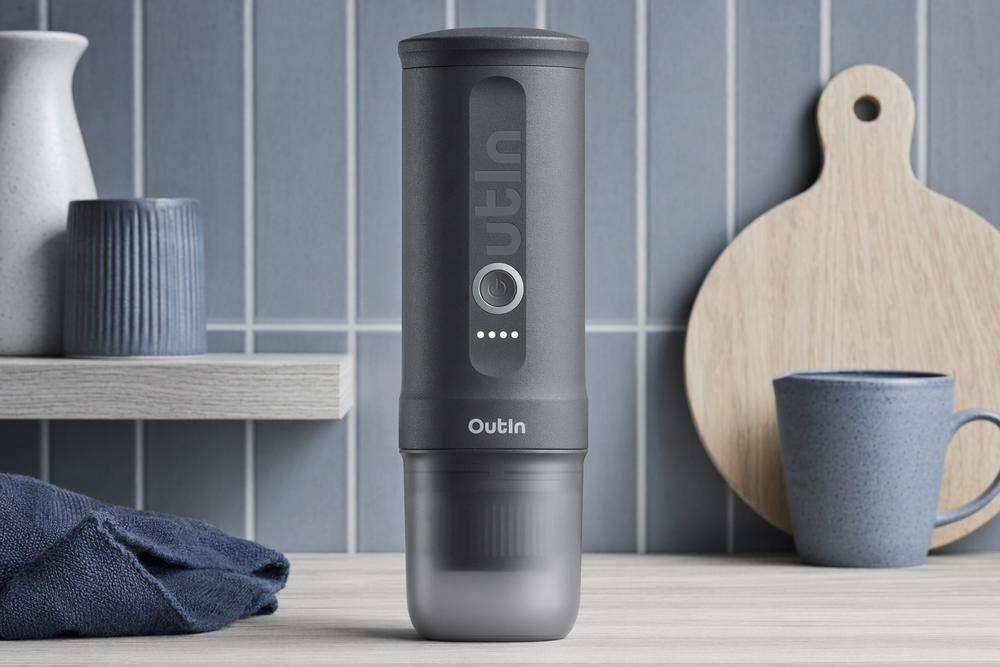

Two packing lists leave the same kitchen with the same intention — drinkable coffee away from home — and arrive at opposite conclusions. The first traveller slides an **[OutIn Nano](https://www.amazon.ca/dp/B0BRKFWPF3?th=1&linkCode=ll2&tag=AFF-KIT-OUTNANO-20&linkId=a0bd8d05150b23ca802c04b911b20b2...
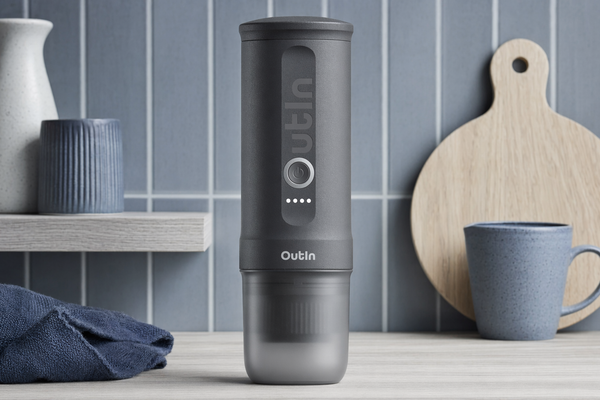
Two packing lists leave the same kitchen with the same intention — drinkable coffee away from home — and arrive at opposite conclusions. The first traveller slides an OutIn Nano into a side pocket: stainless cylinder, USB-C cable, bag of fresh grounds, and the quiet confidence that cold bathroom tap water will become a hot shot before the hotel shower finishes. The second traveller tosses an AeroPress Original into a carry-on: plastic chamber, paper filters, grounds, and the assumption that somewhere — kitchenette, camp stove, office kettle — hot water already exists.
Neither person is wrong. Both machines make morning coffee dramatically better than lobby drip. The category fails them when marketing sells "portable barista" without naming which physical dependency each product carries. Every travel brewer is a bet on how you want to interact with your environment: bring the heat or bring the plunger. The OutIn Nano and AeroPress sit on opposite sides of that bet. This essay is not a spec shootout. It is a map of two philosophies Canadian travellers actually need — and a decision tree for knowing which map is yours.
If you want extraction mechanics, battery math, and trip-type tables before choosing a camp, start with our field guide: Travel Coffee in Canada: Electric Espresso vs Manual Immersion. If you already know that espresso needs pressure and immersion needs time, stay here.
The split: battery-powered espresso vs manual immersion anywhere
Travel coffee comfort stacks three variables — heat, pressure, and ritual — that product pages happily blur.
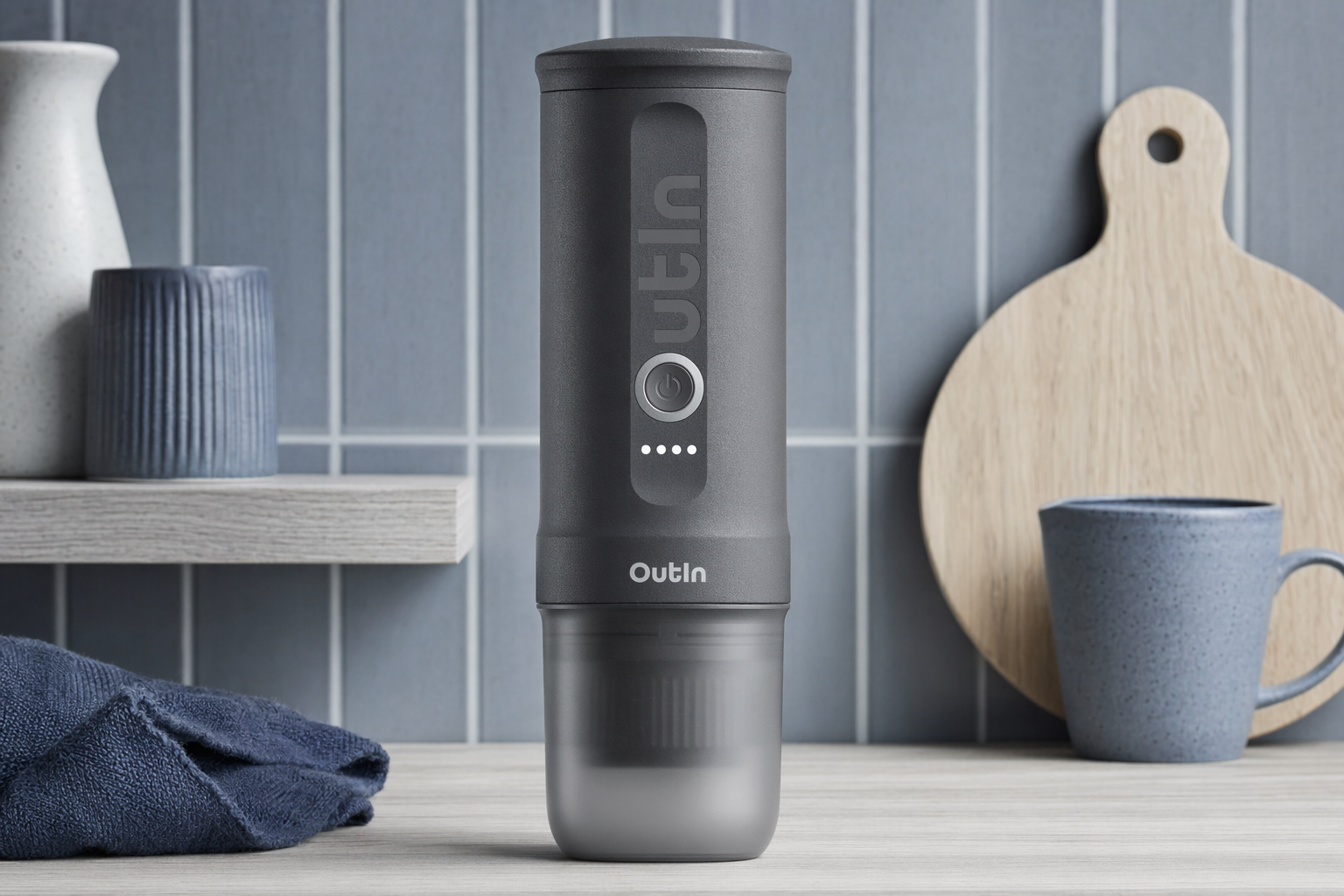
Carry the heat treats hot water as the scarce resource. Hotel kettles are slow, camp stoves are weather-dependent, office microwaves are cursed. The OutIn Nano's philosophy is self-contained extraction: pour cold water, let lithium and a heating element do the thermodynamics, let a pump deliver ~20 bar, receive a shot with crema. You trade weight, price, and charge management for independence from whatever sad appliance the building provides.
Carry the simplicity treats electronics as the scarce resource. Outlets fail, chargers wander, batteries age. The AeroPress philosophy is universal dependency: if you can produce water between 90–96°C, the brewer works forever. You trade crema and espresso texture for ~200 grams of plastic, a two-minute ritual, and a cup that costs a fraction of the Nano.
Both philosophies can coexist in one household — Nano for the car, AeroPress for the tent — but they should not be confused in one diagnosis.
The wrong purchase is not Nano instead of AeroPress — it is buying a battery when you always have a kettle, or buying a plunger when you never do.
Engineering bets: what each machine refuses to do
The Nano heats; the AeroPress never will. That single design fork explains the price gap, the weight gap, and the cup gap.
OutIn packed a 7,500 mAh battery, heating element, and pressure system into a ~670 g cylinder because warming water from cold is energetically expensive. Physics does not negotiate: specific heat means three to five shots from cold water before recharge, no brewing while plugged in, and a hard requirement for 15W+ USB-C chargers. The machine's entire reason to exist is eliminating the kettle hunt. When that hunt is already easy — your office has a Breville kettle, your cabin has a propane burner — you may be paying for self-heating you will never use.
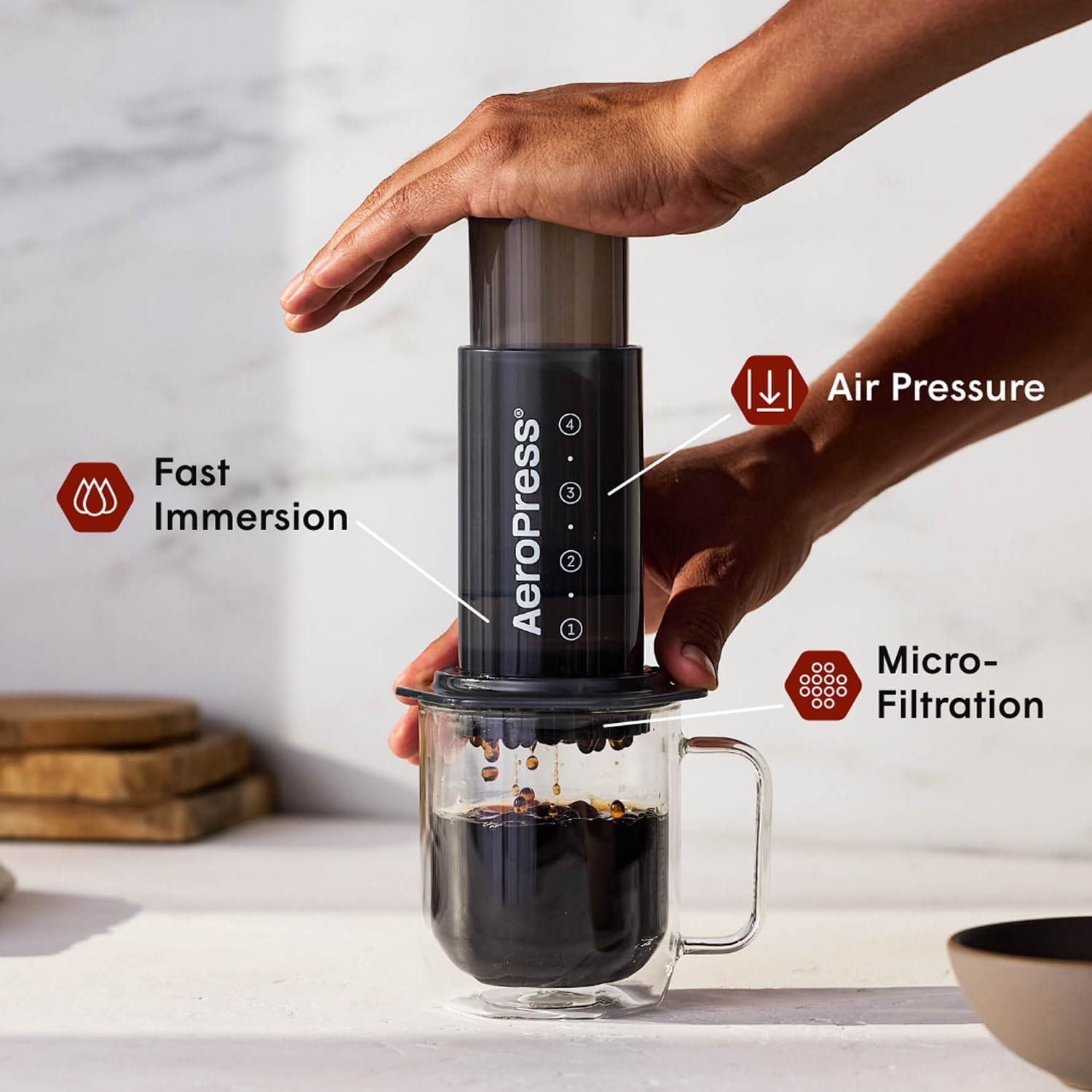
The AeroPress is deliberately dumb in the best sense. Alan Adler's design hybridizes immersion and hand pressure: steep, plunge through paper, produce concentrate. No firmware. No charge cycles. No "will this brick wake it up" forum threads. The engineering bet is that hot water is easier to find than reliable portable heat — and for many Canadian trips, that bet holds.
Cup honesty: crema vs clean concentrate
Neither machine makes "better coffee" universally. They make different cups honestly — if you align expectations.
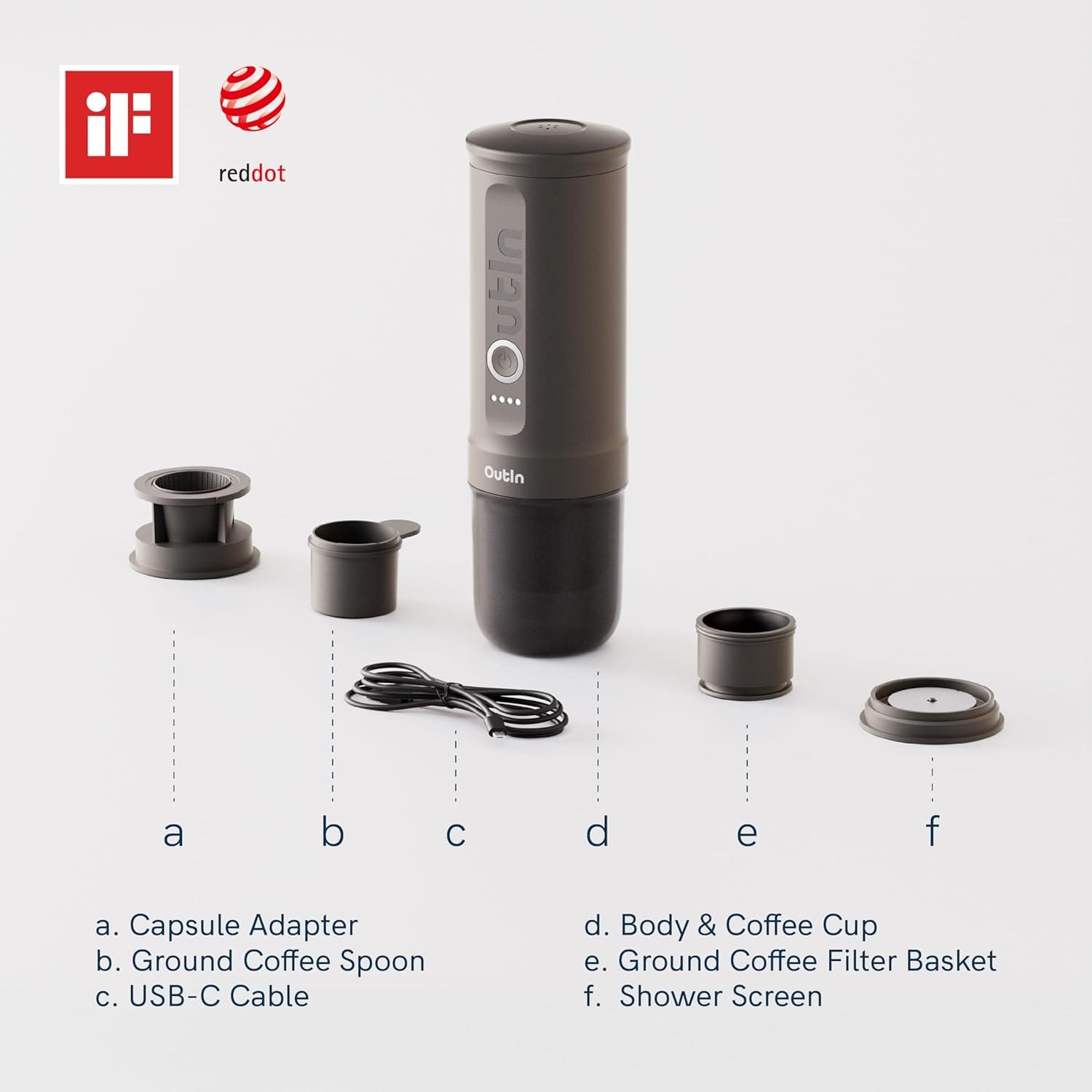
OutIn Nano output sits in espresso territory: small volume, emulsified oils, crema on a fresh roast, intensity measured in sips. The stock 8-gram basket skews ristretto-short; most serious owners add the OutIn Basket Plus for 12–14 gram doses that feel like a proper single. Fresh grounds beat Nespresso pods here — pods under-extract in a machine happiest with coffee you ground yourself. Grind slightly coarser than countertop espresso if shots stall; the puck is almost always the culprit.
AeroPress output is concentrated coffee, not espresso. No thick crema. No nine-bar mouthfeel. Lower pressure extracts gentler — less bitterness, paper filters catch fines French press leaves behind. Drink straight for intensity or dilute for an Americano-style cup. Canadian owners who adjusted expectations report cups that rival or beat many home setups for smoothness — but the texture differs, and pretending otherwise breeds one-star reviews.
Philosophy in one sentence each:
- Nano: you want a shot that looks and drinks like espresso without negotiating with a hotel kettle.
- AeroPress: you want an excellent strong cup fast, and you accept that "espresso" on the box is marketing shorthand.
Power and weight: what actually lives in your bag
OutIn Nano packing reality:
- ~670 g before grounds, cable, and charger
- USB-C dependency — car port, desk outlet, power bank
- Cannot brew while charging; dead battery = waiting
- Basket Plus adds ~$55–60 and should be in the budget from day one if cup volume matters
- All-in ~$310–330 CAD before grinder
AeroPress packing reality:
- ~200 g — side pocket, desk drawer, ultralight backpack
- Zero electronics — works after the apocalypse if you have fire
- Paper filters are consumables; pack a zip bag
- ~$55 CAD — often less on sale
- Hot water is non-negotiable
The weight difference is not cosmetic. On a carry-on-only work trip, 470 grams matters. On a car commute where the Nano never leaves the cup holder, it does not.
Scenarios: where each philosophy wins
Hotel desk, business travel, USB nearby
Nano camp wins. The in-room kettle is unreliable or missing; the lobby wants $6 for milk foam. Cold water, button, three minutes, shot. Charge overnight. Add Basket Plus if the first stock shot feels polite.
AeroPress camp still works if the room has a kitchenette and you value weight — but you are now dependent on the same kettle infrastructure the Nano was designed to bypass.
Campsite, cabin, multi-day backpack
AeroPress camp wins if you have a stove or fire. No battery ceiling. Brew until fuel runs out.
Nano camp works for car camping with a power bank and modest shot expectations — three to five cold-water shots per charge, then wait. Multi-day off-grid without solar or generator is the Nano's honest failure mode: a heavy cylinder that becomes a paperweight.
Office and WFH desk
Split decision. Nano if your desk has USB and you want espresso texture without the break-room pod machine. AeroPress if a kettle lives three metres away and you prefer a two-minute ritual over charge management.
Long-haul flight
Neither brews at altitude. Both empty brewers generally pass carry-on; check CATSA and airline lithium rules for the Nano battery. Philosophy does not matter until you land.
Condo, minimal counter space
Nano replaces a countertop espresso machine for occasional shots — self-heating, one button, stores in a cupboard. AeroPress replaces drip and pods for daily single cups at a fraction of the cost — but it is not espresso for latte art dreams.
Side-by-side: which problem are you solving?
| Question | OutIn Nano | AeroPress Original |
|---|---|---|
| Core philosophy | Carry the heat | Carry the simplicity |
| What you must supply | USB power, fresh grounds, patience | Hot water, fresh grounds, two minutes |
| What you get | Espresso shot with crema | Concentrated coffee; dilute optional |
| Off-grid longevity | Limited by battery | Unlimited with heat source |
| Learning curve | Low — one button | Low-medium — grind and temp |
| Honest all-in cost | ~$310–330 with Basket Plus | ~$50–55 |
| Deep dive | OutIn Nano guide | AeroPress guide |
This table does not pick a winner. It names the problem each row solves.
The Basket Plus question — and when Nano owners second-guess
Buy the Nano, pull the first shot, and something feels small — not the machine, the cup. Crema may be beautiful; portability may deliver; the drink lands closer to a ristretto than the café down the street. The stock 8 g basket is the usual culprit.
The OutIn Basket Plus (~$55–60 CAD) bumps dose to 12–14 grams for fuller body without abandoning the self-heating lane. It is Nano OTEM-01 specific — not cross-compatible with Picopresso or other portables. Pods do not benefit; fixed-dose capsules ignore basket upgrades.
A fair question follows: if the Nano needs a $60 basket, should you have bought a manual portable espresso machine instead? Different philosophy — hand pressure, your kettle, no battery ceiling. That comparison belongs beside Picopresso and STARESSO, not beside the AeroPress. The Nano plus Basket Plus keeps you in carry the heat territory while closing the dose gap. The AeroPress was never competing for crema; it competes for simplicity per gram in your bag.
Nano camp: when carrying heat is the right bet
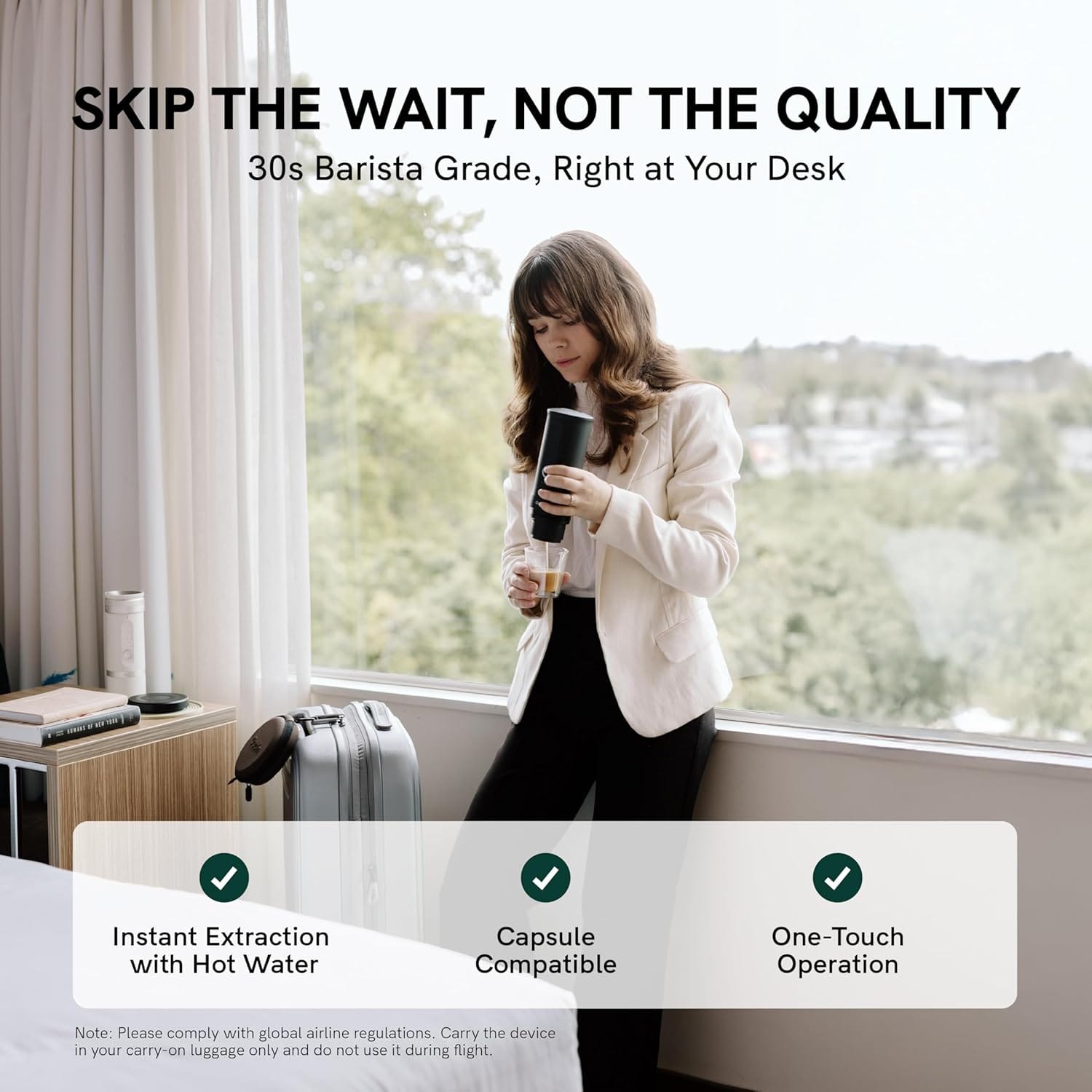
The OutIn Nano embodies the self-sufficient shot philosophy. Its best mornings look like this: wake in an unfamiliar room, pour cold water, press one button, wait ~200 seconds, drink something that would cost $5 downstairs.
When the Nano camp wins:
- Hotel and road trips where USB exists but kettles do not
- Car commuters with a cup holder and a 15W car port
- Office workers escaping pod mediocrity without claiming the espresso machine
- Condo dwellers wanting occasional espresso without counter surrender
- Solo drinkers — one shot, one person, one morning
When the Nano camp disappoints:
- Multi-day wilderness without reliable charging
- Group brewing — sequential shots drain battery fast from cold water
- Crema purists who will accept a kettle for a hand-pump machine's cup
- Buyers who hate managing grind, rinse, charge level, and accessory budgets
- Pod-primary drinkers — fresh grounds are where this machine shines
For charger wattage wars, cold-vs-preheated shot math, and reliability patterns, the OutIn Nano buyer guide goes deeper than this essay needs.

AeroPress camp: when carrying simplicity is the right bet
The AeroPress embodies the hot-water-only philosophy. Its best mornings look like this: boil water on whatever heat source the environment provides, steep one minute, press thirty seconds, rinse, leave no trace.
When the AeroPress camp wins:
- Backpackers and campers with a stove — weight and infinite brews
- Hotel rooms with functional kitchenettes
- Budget buyers wanting café-adjacent cups at ~$50–55
- Solo drinkers who prefer smooth concentrate over crema texture
- Anyone who has lost a charger and still wants coffee
When the AeroPress camp disappoints:
- Scenarios with no heat source at all — neither machine helps here
- Espresso purists chasing nine-bar mouthfeel
- Brunch hosts serving four people sequentially
- Buyers expecting zero learning — grind and temp still matter once
For inverted-method debates, seal replacement, and counterfeit warnings, the AeroPress buyer guide has the ownership detail.
Owning both: legitimate — with division of labour
Some travellers eventually pack both. That is not indecision; it is trip-specific philosophy switching.
Nano for: car, hotel-without-kettle, office USB desk — anywhere heat is scarce and power is not.
AeroPress for: backpack, cabin with stove, guest room with a kettle — anywhere weight matters and water is easy.
Do not: bring both on a minimalist carry-on week unless you have a specific reason. One machine per trip keeps packing honest.
Do: share one hand grinder between both if you brew fresh at home and away.
What neither philosophy fixes
Honesty requires naming the gaps.
Steamed milk drinks. No travel brewer in this comparison froths milk. Lattes need a separate frother or café surrender.
Batch mornings. One cup at a time is the design. Families and brunch hosts need different tools.
Zero-effort coffee. Both reward a small ritual. Pod machines win laziness at flavour cost.
Manual portable espresso. Picopresso, Nanopresso, and STARESSO occupy a third lane — hand pressure, your kettle, no battery. If that triangle is your actual search, you are comparing different engineering bets than Nano vs AeroPress. This essay stays on heat vs simplicity; hand-pump espresso is a separate field guide.
Verdict framework: choose your camp
Choose the OutIn Nano if:
- You will often want coffee where power exists but kettles do not
- Espresso texture and crema matter more than pack weight
- You are a solo or occasional drinker — three to five cold shots per charge is enough
- You will use fresh ground coffee and budget for Basket Plus
- You accept charge management as part of the ritual
Choose the AeroPress if:
- Hot water is reliably available — hotel kitchenette, office, camp stove
- Weight and price dominate — ~200 g and ~$55 vs ~670 g and ~$210+
- You want smooth concentrated coffee, not crema theatre
- You refuse to depend on batteries, firmware, or charger wattage
- You will dial grind and temperature once and repeat
Choose both if:
- Your travel splits between car-or-hotel-USB weeks and backpacking weekends
- You can assign each machine a clear jurisdiction in your bag
Choose neither if:
- Lobby coffee is fine, milk drinks are mandatory, or you need a countertop home espresso machine instead of a travel compromise
Frequently asked questions
Is the OutIn Nano better than the AeroPress?
Neither is universally better. The Nano makes espresso-style shots with self-heating; the AeroPress makes excellent concentrated coffee with zero electronics. Match the machine to your trip infrastructure and cup preference.
Can the AeroPress replace espresso for travel?
It replaces bad travel coffee reliably. It does not replace espresso texture. If crema and nine-bar mouthfeel are the goal, the Nano or a manual portable espresso machine is the correct category.
Do I need the OutIn Basket Plus?
If the stock 8 g shot feels short and you brew fresh grounds, yes — most owners treat it as mandatory. Pods do not benefit. See our Basket Plus buyer guide for compatibility and honest cost.
Which is lighter for backpacking?
The AeroPress at ~200 g, by a wide margin. The Nano at ~670 g plus cable and charger is car-and-hotel territory.
Can I use pods in both?
The Nano accepts Nespresso pods via adapter — convenience over quality. The AeroPress uses loose grounds only. Pod-primary travellers should temper Nano expectations.
Where do I learn the extraction physics?
Our field guide Travel Coffee in Canada: Electric Espresso vs Manual Immersion teaches espresso vs immersion, battery math, and trip-type tables before this philosophy split.
The bottom line
Travel coffee is a philosophy disguised as a product category. The OutIn Nano bets that carrying heat — battery, element, pressure — frees you from bad hotel infrastructure. The AeroPress bets that carrying simplicity — a plunger and a filter — frees you from everything except hot water, which is often easier to find than a good charge brick.
Name your morning: shot or concentrate. Name your trip: USB or kettle. Name your tolerance: battery math or grind dial-in. Pick the camp that matches. Read the deep dives for ownership quirks, the field guide for physics, and stop pretending one travel brewer solves every Canadian road, trail, and desk.
Discussion
Sign up or sign in to join the conversation.