
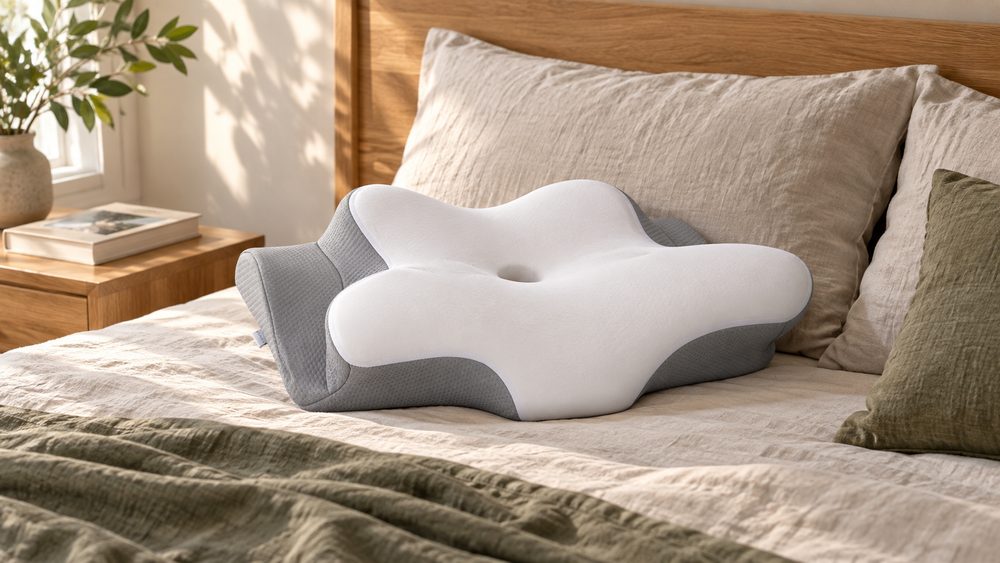

Missleep offers two fixed contours and a removable cover. Here is how to decide whether that shape fits your bed, comfort preferences and buying terms.
A pillow can look substantial on the bed and still feel wrong once you lie down. Perhaps you keep folding the corner under your neck, or moving the filling away from your head. A shaped foam pillow takes a different approach: the contour stays in place, and you choose whether that shape suits you.
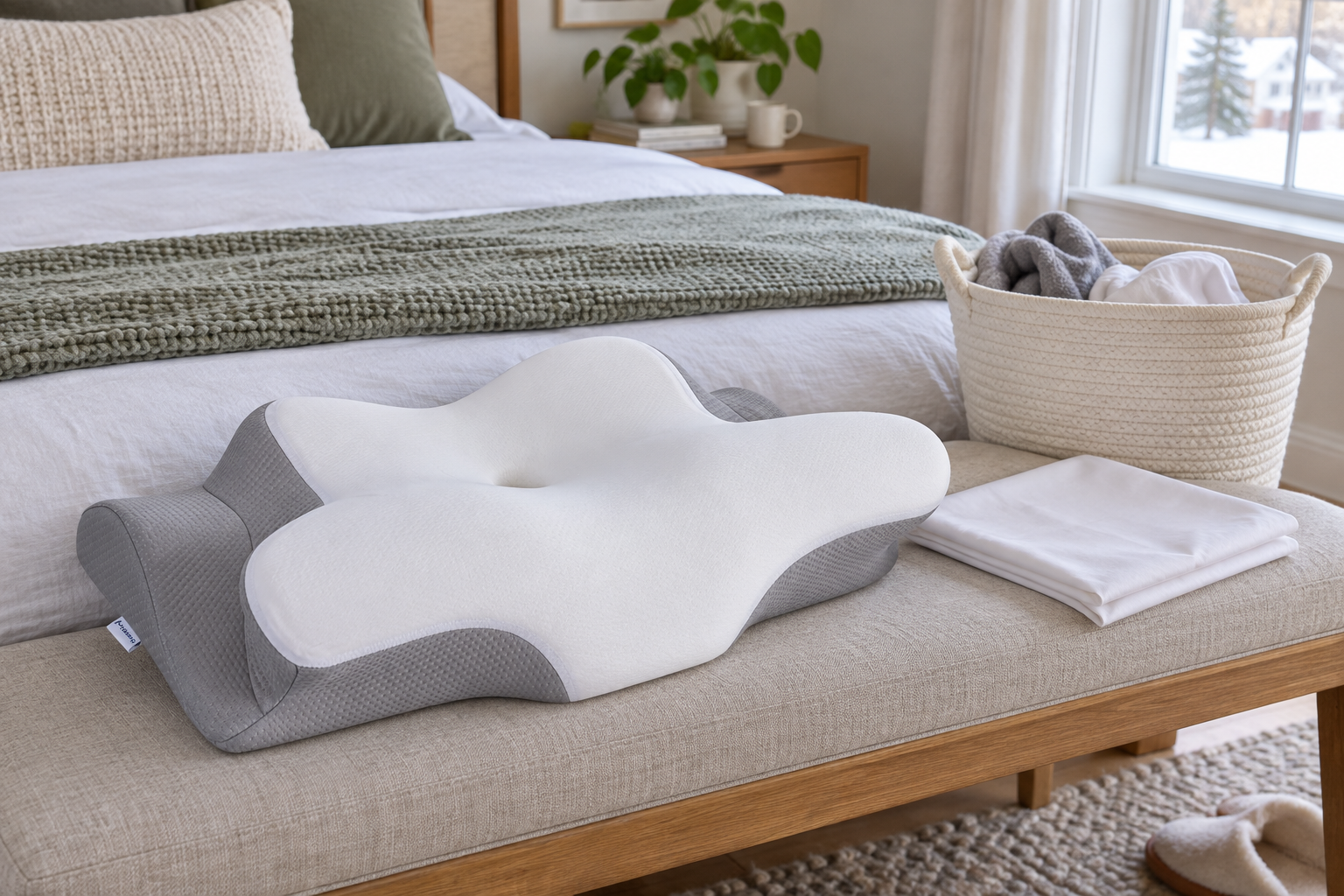
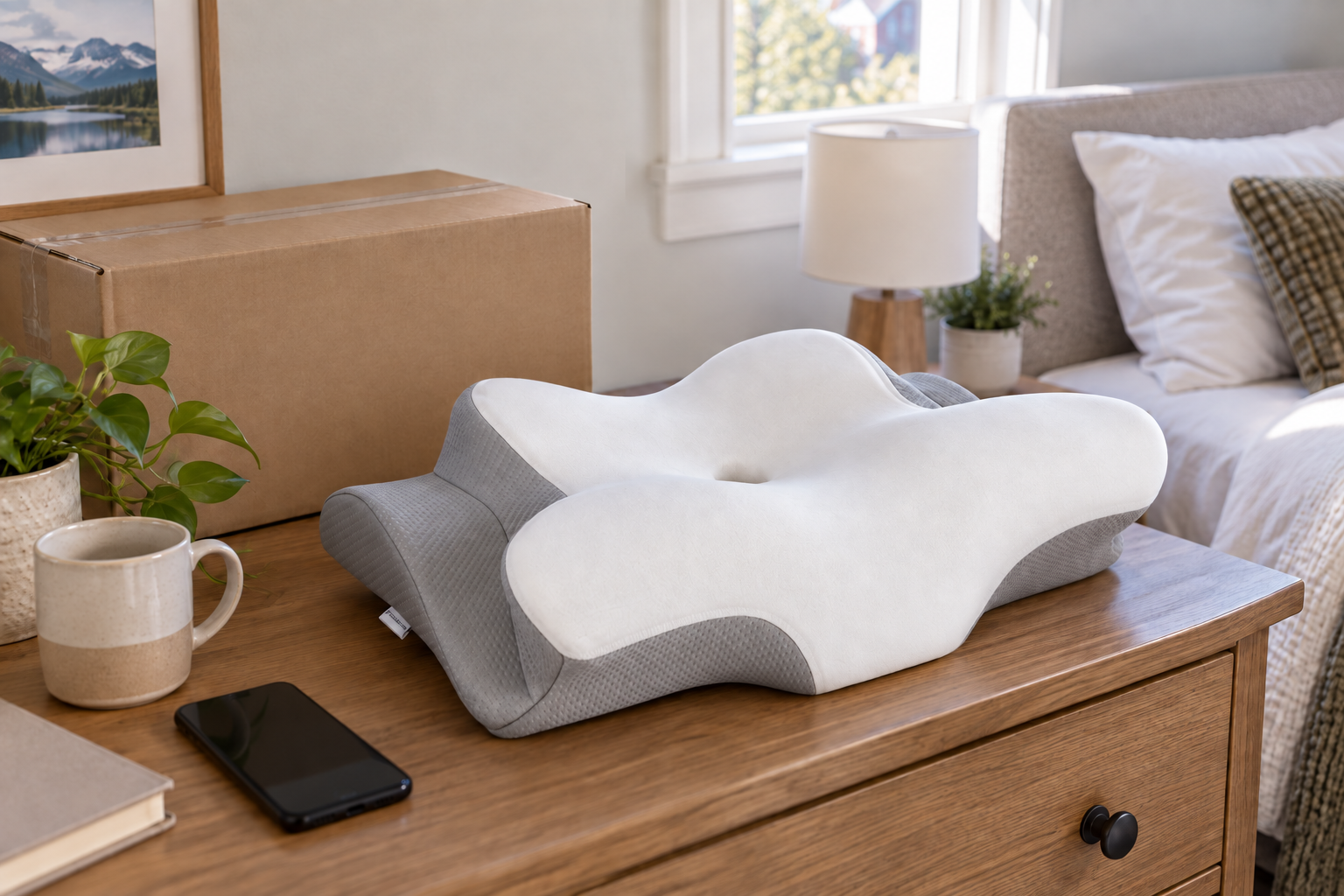
The Missleep cervical pillow offers two contour heights and a removable cover. Its appeal is that you can turn the pillow around to try a different edge without handling loose filling. That makes it worth considering if you want a defined sleeping surface. It is a less obvious choice if you love a soft pillow that you can bunch into any shape.
The decision should be about comfort, fit and the conditions of purchase. The words “cervical” and “ergonomic” do not establish that this particular pillow will treat pain or improve your sleep.
As an Amazon Associate, Celmin earns from qualifying purchases.
See the exact Missleep pillow on Amazon.ca
The short verdict
Consider the Missleep if you want to try a moulded memory-foam pillow with a higher and lower sleeping edge, and the seller provides acceptable return conditions. The most useful feature is the choice of two contours. It gives you an alternative if one side feels too high, although it cannot offer every possible height.
Look elsewhere if you need removable filling, dislike a fixed contour or are choosing a pillow specifically to address an unexplained medical problem. A pillow is a comfort purchase; persistent symptoms deserve a separate assessment.
This guide concerns the white Missleep pillow under ASIN B0GWV5DCVK. Similar photographs and overlapping product titles are common in this category, so compare the actual listing rather than treating every contour pillow as interchangeable.
What the listing tells us—and what it leaves open
The Amazon.ca listing describes slow-rebound memory foam, two heights selected by rotating the pillow, and a removable, machine-washable “ice silk” cover. These are seller descriptions, not the results of our own inspection or sleep test.
Two particularly useful measurements are missing from the evidence reviewed: the actual height of each contour and the compressed height beneath a sleeper. Without them, a precise recommendation for your body shape would be guesswork. The available dimensional fields are not reliable enough to publish a complete size specification.
Before ordering, look for a current dimension diagram that identifies both raised edges, the central area and the overall width. A measurement of the shipping package will not answer whether the pillow fits your normal pillowcase or gives your head enough room to move.
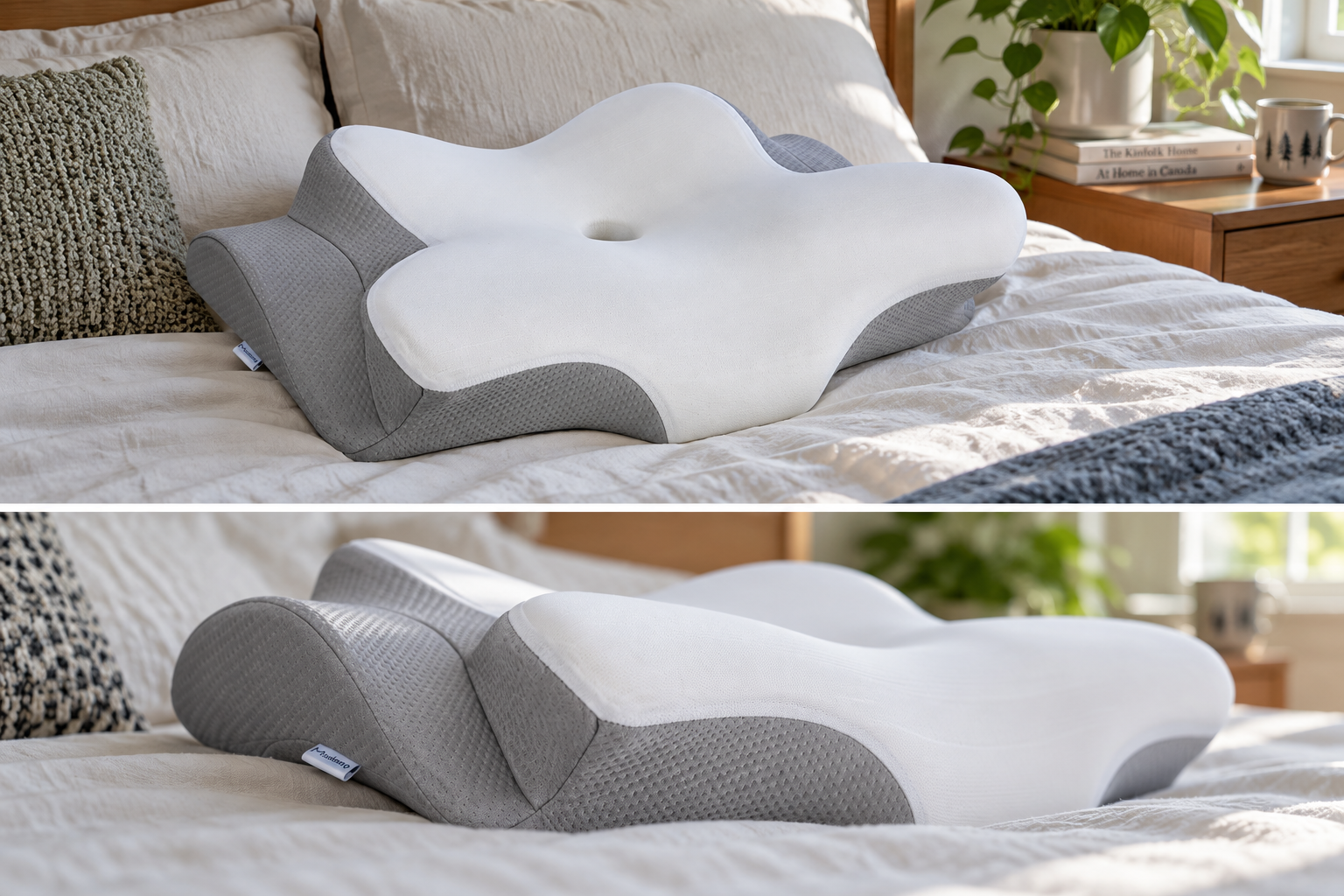
Two heights are a choice, not unlimited adjustment
With this format, changing height means rotating the pillow so the other contoured edge is nearest your shoulders. You are selecting between shapes already built into the foam. That is different from opening a shredded-fill pillow and removing a handful of material.
The distinction matters because a second contour may solve a small mismatch, but it cannot turn the pillow into a completely different product. If both edges feel too tall or the central cradle feels restrictive, there is no verified removable layer here to make it lower.
Think about what you currently do to get comfortable. If you consistently roll one edge beneath your neck, a defined contour may be appealing. If you repeatedly flatten the entire pillow, add another pillow or fold it in half, you may value a more adjustable format. Those observations are more useful than choosing from a photograph of an idealized sleeping position.
See the Missleep contour and cover
This Missleep demonstration by Worth Every Penny gives a closer look at the contoured shape, removable cover and back- and side-sleeping positions. Use it to understand the design before deciding whether that shape suits your bed.
Judge it on your own mattress
Pillow fit changes with the bed beneath it. The gap that needs support is affected by your sleeping position and how far your shoulder and upper body settle into the mattress. A pillow that feels high on a firm guest bed may feel different on your own mattress.
HealthLink BC’s guidance on sleeping positions recommends a pillow that supports the neck without pushing the head forward on the back or leaving it out of line with the body on the side. It does not endorse this product or prescribe one universal pillow height.
Use that as a practical way to assess comfort, not as a reason to force yourself into a rigid pose. Lie in your ordinary position with your usual bedding. Notice whether you can relax or feel that you need to compensate by tucking a hand underneath, moving to the edge or adding more support. An attractive contour is useful only if you can actually rest on it.
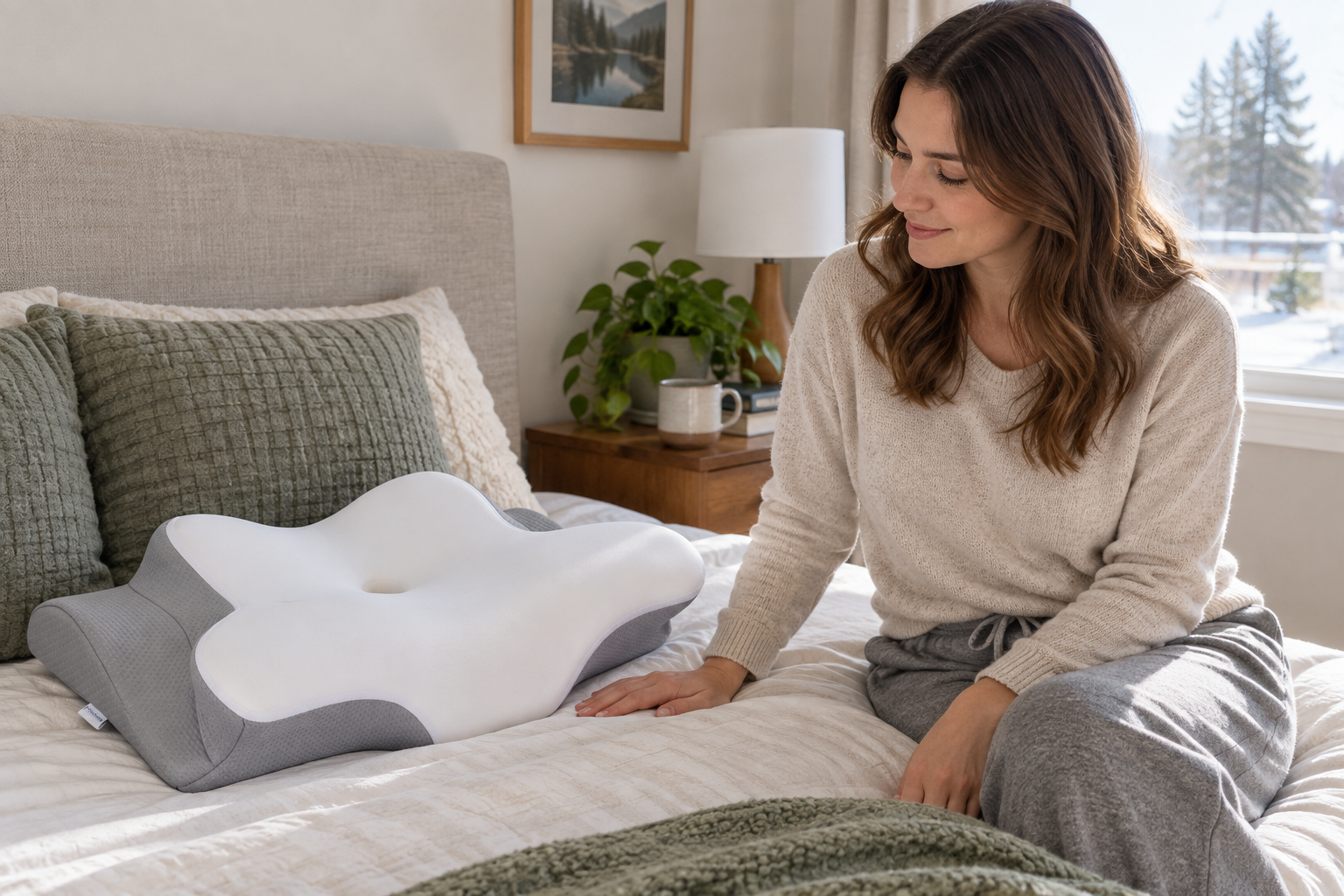
What side, back and mixed sleepers should consider
For a side sleeper, the immediate question is whether the pillow comfortably fills the space between the head and mattress. The taller edge may be worth trying, but “side sleeper” alone does not determine the correct choice. Shoulder shape and the mattress are part of the same setup.
For a back sleeper, pay attention to whether the raised edge feels supportive or simply pushes you forward. Trying the lower contour can help you compare the two available options. Neither is automatically correct because of the position named in the listing.
If you change positions during the night, consider how you move across the pillow. A contour that is pleasant when you carefully settle into its centre may be less appealing if you prefer a broad, flatter surface. You do not need to decide your entire sleep identity before buying; you need a pillow that accommodates your usual movements.
The listing also mentions stomach sleepers. Treat that as a marketing claim about intended customers, not evidence that the shape suits everyone in that position. If your current position causes discomfort, a different pillow may be only part of the discussion.
Memory foam changes the feel of the bed
Slow-rebound foam is presented as the central material feature. It is designed to respond differently from a loose-filled pillow that you shake and fluff. The important buying question is whether you prefer that more defined surface.
Do not assume that “high density” supplies a usable firmness rating. The listing does not provide enough comparable testing to tell us exactly how firm this pillow feels against another brand or how its support will change after months of use. A finger pressing into foam in a product video is not a durability test.
If you have used a moulded foam pillow before, that experience is useful context. If you have only used soft fibre or down-style pillows, recognize that this is a change in format as well as a replacement. Return conditions are especially valuable when the feel is unfamiliar and cannot be tried in a shop.
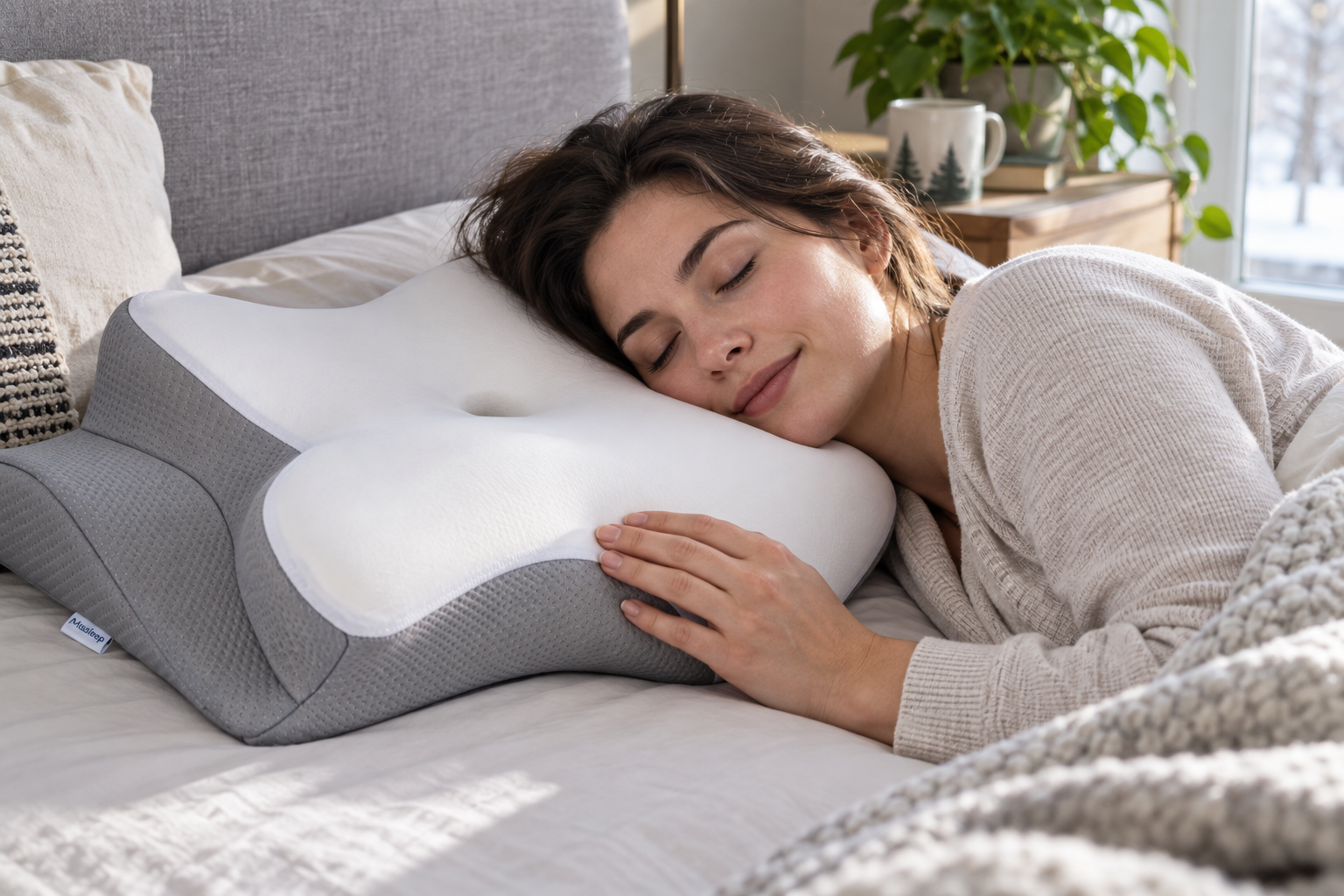
A cooling cover is not a temperature guarantee
Missleep describes its included cover as breathable “ice silk.” That is the seller’s material description. It should not be read as evidence of silk fibre content or a measured ability to keep the pillow cool throughout the night.
Surface texture matters: some people prefer a smooth cover, while others want the familiar feel of cotton bedding. If you intend to add a regular pillowcase, check that it fits without tightly compressing the contour. You will then be sleeping against that added fabric rather than directly against the supplied cover.
Hot sleepers should consider the whole bed. A warm bedroom, heavy bedding or a mattress that feels warm will not necessarily be transformed by one new cover. There is no comparative temperature testing here that would justify calling the Missleep the coolest option or promising a particular number of cooler hours.
Washing the cover and looking after the core
The removable cover is the useful housekeeping feature. The listing says that cover is machine washable, but the care label should determine the cycle, temperature and drying method when the pillow arrives.
Do not extend that statement to the foam core. A washable cover does not establish that the whole pillow can go through a washing machine. Follow the supplied care instructions for the foam, and ask the seller if those instructions are missing.
Think about ordinary laundry logistics too. If there is only one fitted cover and it needs time to dry, decide what you will use that night. Ask whether replacement covers are available for the exact contour. A specialized shape can be convenient during sleep but less convenient when its only well-fitting cover is in the wash.
Read material and warranty claims carefully
The listing uses certification language as well as comfort claims. We have not independently verified a certificate for this exact Missleep pillow, so those names are not a reason to describe it as universally safe, odour-free or clinically effective.
CertiPUR-US explains that its programme certifies flexible polyurethane foam, rather than finished pillows or entire companies. Even a verified foam certification would address a different question from whether a pillow suits your neck or feels comfortable overnight.
If a particular material standard matters to you, request the applicable certificate or directory information and make sure it relates to the product being sold. Clear documentation is more useful than a row of logos in a picture.
Missleep’s listing mentions a six-month warranty. Confirm who provides it, what it covers and how a Canadian customer makes a claim. A warranty addressing a product fault is different from permission to return a pillow that simply feels wrong.
Buying in Canada without guessing about the return
Before checkout, check the selected variant, seller, delivery date and return terms. Bedding can have condition requirements, and a generic store return banner is not enough to establish that a used pillow may be returned after a comfort trial.
Ask the practical question directly: can you return this pillow after opening and trying it, within what period, and at whose shipping cost? Keep the answer with the order confirmation. Do not assume that another buyer’s review establishes your own terms.
When comparing value, include the possibility of an extra cover and the inconvenience of a poor fit. A low purchase price can make experimentation easier, but it cannot compensate for a shape you do not enjoy using. If the seller cannot supply basic height or care information, there is a reasonable case for choosing a more clearly documented alternative.
A sensible first assessment
When the pillow arrives, compare the label and shape with the item ordered, read the unpacking instructions and retain the packaging while you check the terms. Follow any instructions about allowing the foam to recover its shape before judging the height.
Try each edge on the same mattress with the same bedding. Make one change at a time so you can tell which position feels more comfortable. Keep the assessment simple: can you relax, move naturally and sleep without repeatedly rearranging the setup?
There is no universal number of nights that turns a poor fit into a good one. You should not interpret increasing discomfort as proof that the pillow is “correcting” anything. For ongoing neck pain or new concerning symptoms, seek appropriate health advice rather than relying on a product’s pain-relief title. HealthLink BC discusses neck pain and assessment.
The purchase that makes sense
The Missleep is worth considering as a trial of a specific format: moulded foam with two contour heights and an easy-to-remove cover. Its best customer is someone who wants that shape and can evaluate it under clear return terms.
Choose by the fit you need, the feel you prefer and the information the seller can actually provide. The pillow’s name cannot answer those questions for you. If both contours look unsuitable or you want finer height control, an adjustable-fill design may be the more appropriate starting point.
Check the current Missleep listing and purchase terms
For a closer look at the alternative, read Missleep vs Mkicesky Cervical Pillows: Choose the Fit, Not the Bigger Promise.
Research basis: the exact Amazon.ca listing snapshot and linked primary guidance, reviewed September 9, 2026. This is a researched buying guide, not a hands-on sleep test or medical recommendation. Photographs are AI-created editorial illustrations based on product references; they do not document clinical results or product testing.



Discussion
Sign up or sign in to join the conversation.