
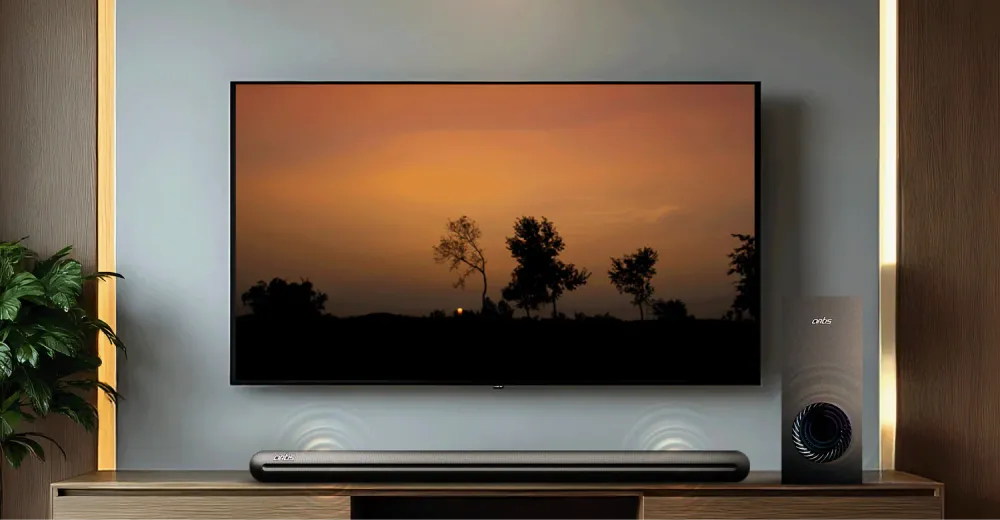

Dolby Atmos promises three-dimensional sound that puts you inside the action—helicopters flying overhead, rain falling around you, dialogue that seems to...
Dolby Atmos promises three-dimensional sound that puts you inside the action—helicopters flying overhead, rain falling around you, dialogue that seems to come from the screen itself. The catch? Traditional Atmos requires ceiling speakers and complex wiring. Atmos soundbars deliver much of that experience with a single device you can set up in minutes.
But not all Atmos soundbars are created equal. Some genuinely create an immersive bubble of sound; others are Atmos in name only. Let's find the ones that actually deliver.
How Atmos Soundbars Work
Understanding the technology helps you choose wisely and set realistic expectations.
The Atmos Difference
Traditional surround sound is horizontal—speakers around you at ear level. Atmos adds height, creating a dome of sound. In a proper Atmos setup, speakers in the ceiling fire sound down at you.
Soundbars can't put speakers in your ceiling, so they use two tricks:
Upward-Firing Drivers: Speakers angled toward the ceiling bounce sound down to your ears. This creates the illusion of overhead audio.
Psychoacoustic Processing: DSP algorithms manipulate sound to trick your brain into perceiving height and dimension.
What Affects Atmos Performance
- Ceiling height: 8-10 feet is ideal; too high and reflections don't work
- Ceiling material: Flat, hard ceilings reflect best; textured or vaulted ceilings struggle
- Room size: Smaller rooms often sound more immersive
- Content: Native Atmos content sounds dramatically better than upmixed stereo
Atmos soundbars won't match a proper 7.1.4 speaker system. But in the right room with the right content, they can be genuinely impressive—and far more practical for most living rooms.
Best Dolby Atmos Soundbars
Best Overall: Sonos Arc
The Arc delivers exceptional sound quality, seamless smart home integration, and genuine Atmos immersion in one elegant package.
Key Features:
- 11 Drivers: Including upward-firing for Atmos
- Trueplay Tuning: Calibrates to your room using your phone
- eARC Support: Full-quality Atmos passthrough
- Voice Assistants: Alexa and Google built-in
- Multi-Room: Part of Sonos ecosystem
Sound Quality: Rich, detailed, and room-filling. Excellent dialogue clarity. Bass is good but benefits from adding the Sonos Sub.
Atmos Performance: Among the best for soundbars. Height effects are noticeable and convincing in the right room.
Price: Around $900
Best Premium: Samsung HW-Q990D
If you want the most immersive Atmos experience possible from a soundbar system, Samsung's flagship delivers.
Key Features:
- 11.1.4 Channel: True surround with wireless rear speakers and sub
- 22 Speakers Total: Maximum driver count
- Q-Symphony: Syncs with Samsung TV speakers
- SpaceFit Sound Pro: Auto room calibration
- Wireless Dolby Atmos: Rear speakers are truly wireless
Sound Quality: Reference-level for soundbar systems. Approaches dedicated home theater performance.
Atmos Performance: The best available. Rear speakers provide true surround; multiple upward-firing drivers create convincing height.
Price: Around $1,800
Best Value: Vizio Elevate
Vizio's innovative rotating speakers and competitive price make this the value champion.
Key Features:
- 5.1.4 Channel: With wireless subwoofer
- Rotating Speakers: Upward-firing drivers rotate forward for music
- 18 Drivers: Impressive for the price
- DTS:X Support: Alternative to Atmos
- Chromecast Built-in: Easy streaming
Sound Quality: Excellent for the price. Powerful bass from the included sub. Clear dialogue.
Atmos Performance: The rotating speakers are genuinely clever—they optimize for movies (up) or music (forward). Height effects are good.
Price: Around $700
Best Compact: Sonos Beam (Gen 2)
For smaller rooms or tighter budgets, the Beam delivers Atmos in a compact form factor.
Key Features:
- 5 Drivers: Compact but capable
- Virtual Atmos: Psychoacoustic processing (no upward-firing drivers)
- eARC Support: Full Atmos passthrough
- Voice Assistants: Alexa and Google
- Expandable: Add Sub and surrounds later
Sound Quality: Impressive for its size. Clear, balanced, with decent bass. Best for rooms under 300 sq ft.
Atmos Performance: Virtual Atmos is less convincing than physical upward-firing drivers, but still adds dimension. Manages expectations.
Price: Around $500
For more on audio connections, check out our guide on digital optical cables.
Best Budget: Vizio M-Series 5.1.2
Genuine Atmos with upward-firing drivers at an aggressive price point.
Key Features:
- 5.1.2 Channel: With wireless subwoofer
- Upward-Firing Drivers: Real Atmos, not virtual
- DTS:X Support: Format flexibility
- Voice Assistant Compatible: Works with Alexa/Google
- Bluetooth: Easy music streaming
Sound Quality: Good for the price. The subwoofer adds impact. Dialogue can get lost in action scenes.
Atmos Performance: Basic but real. You'll hear height effects, though less precisely placed than premium options.
Price: Around $350
Understanding Soundbar Channels
Soundbar channel counts can be confusing. Here's what the numbers mean:
The X.Y.Z Format
- First number (X): Main/surround channels (5, 7, 9, 11)
- Second number (Y): Subwoofer channels (usually 1)
- Third number (Z): Height/Atmos channels (2 or 4)
Examples
- 3.1: Soundbar with left, center, right + subwoofer (no Atmos)
- 5.1.2: Adds virtual surround + 2 upward-firing Atmos drivers
- 7.1.4: Adds rear surrounds + 4 Atmos drivers (front and rear height)
- 11.1.4: Maximum configuration with dedicated center and wide channels
Does More Always Mean Better?
Not necessarily. A well-tuned 5.1.2 system can sound better than a poorly implemented 7.1.4. Quality of drivers and DSP processing matters more than raw channel count.
Setup for Best Atmos Performance
Placement
- Center the soundbar under your TV
- Don't obstruct upward-firing drivers (no shelf above)
- Leave space between soundbar and wall for rear-firing drivers
- Position subwoofer in a corner for maximum bass
Room Calibration
Most Atmos soundbars include room calibration:
- Sonos Trueplay: Uses iPhone microphone
- Samsung SpaceFit: Automatic with compatible TVs
- Others: Test tones and microphone measurement
Always run calibration—it significantly improves performance.
TV Settings
- Enable eARC if available (Settings → Sound → HDMI eARC)
- Set audio output to "Passthrough" or "Bitstream"
- Disable TV speakers to avoid doubling
- Enable Atmos in streaming app settings
Atmos Content Sources
Streaming Services with Atmos
- Netflix: Many originals and select movies
- Disney+: Marvel, Star Wars, Pixar content
- Apple TV+: All original content
- Amazon Prime: Select titles
- HBO Max: Select titles
Requirements for Streaming Atmos
- Premium subscription tier (some services)
- Compatible device (Apple TV 4K, Fire TV Stick 4K, etc.)
- eARC connection (HDMI) or compatible TV app
- Sufficient internet speed (25+ Mbps recommended)
Physical Media
- 4K Blu-ray: Best Atmos quality (lossless TrueHD)
- Regular Blu-ray: Some titles include Atmos
- Requires: Blu-ray player with Atmos passthrough
Expanding Your System
Many soundbars can grow with your needs.
Adding a Subwoofer
If your soundbar doesn't include one, adding a sub transforms bass performance. Check compatibility—most brands require matching subs.
Adding Rear Speakers
Wireless rear speakers create true surround instead of virtual. Significant upgrade for movie watching. Again, brand-specific compatibility.
Sonos Example
- Start: Sonos Beam ($500)
- Add Sub: Sonos Sub ($750)
- Add Surrounds: Sonos Era 100 pair ($500)
- Total: $1,750 for a complete 5.1.2 system
Got Questions About Dolby Atmos Soundbars? Let's Clear Things Up.
Do I need a special TV for Dolby Atmos?
You need a TV with eARC (enhanced Audio Return Channel) to pass full-quality Atmos from streaming apps to your soundbar. Most TVs from 2019 onward have eARC. Without eARC, you can still get Atmos by connecting your streaming device directly to the soundbar (if it has HDMI inputs).
Is Dolby Atmos worth it for a soundbar?
Yes, if you watch movies and have a suitable room. Atmos adds genuine dimension to action scenes and immersive content. For music or casual TV watching, the benefit is minimal. The best Atmos soundbars also excel at non-Atmos content, so you're not sacrificing anything.
Why don't I hear the Atmos effect?
Several possibilities: your content isn't actually Atmos (check the info overlay), your TV isn't passing Atmos (check audio settings), your room isn't suitable (vaulted ceilings, very large space), or your expectations are too high (soundbar Atmos is subtle compared to ceiling speakers).
Can I use any subwoofer with my Atmos soundbar?
Usually no. Most soundbars use proprietary wireless connections to their subwoofers. You need the matching sub from the same brand/product line. Some high-end soundbars have subwoofer outputs for third-party subs, but this is rare.
How does Atmos compare to DTS:X?
Both are object-based surround formats that include height information. In practice, they sound very similar. Most Atmos soundbars also support DTS:X. Content availability is the main difference—Atmos is more common on streaming services, while DTS:X appears more on Blu-rays.
Ready to upgrade your home theater audio? Explore more audio guides and reviews at Celmin to find your perfect setup. https://celmin.ca


Discussion
Sign up or sign in to join the conversation.