
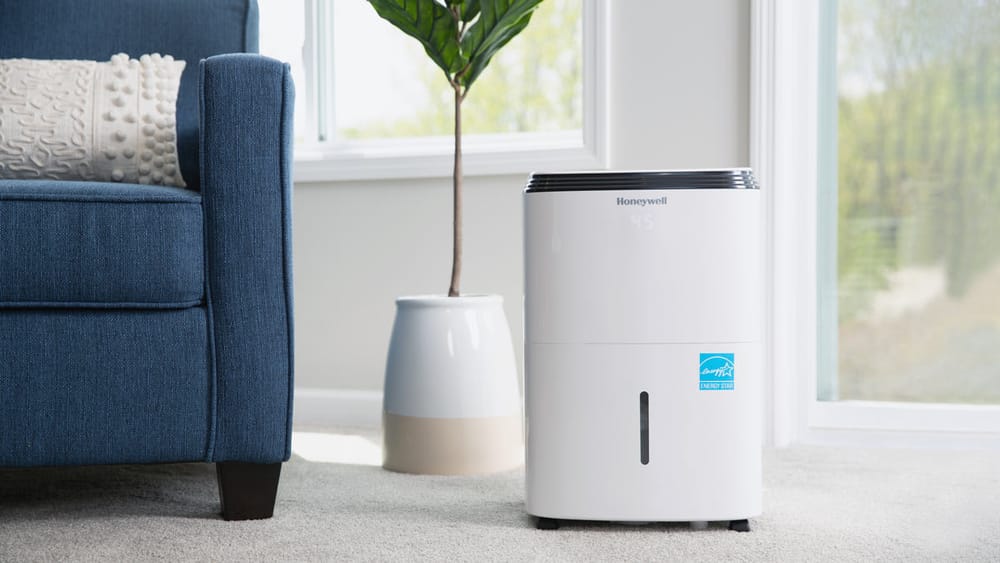

Excess humidity isn't just uncomfortable—it damages your home. Mold grows, wood warps, paint peels, and dust mites thrive. A dehumidifier removes moisture...
Excess humidity isn't just uncomfortable—it damages your home. Mold grows, wood warps, paint peels, and dust mites thrive. A dehumidifier removes moisture from the air, protecting your health and your property.
The ideal indoor humidity is 30-50%. Above 60%, problems start. Basements, bathrooms, and poorly ventilated spaces often exceed this, especially in humid climates or during wet seasons.
Let's find the dehumidifier that'll keep your space dry and healthy.
Signs You Need a Dehumidifier
Visible Signs
- Condensation on windows
- Musty odors
- Visible mold or mildew
- Peeling paint or wallpaper
- Warped wood floors or furniture
- Water stains on walls or ceilings
Health Signs
- Increased allergy symptoms
- Respiratory issues
- Dust mite problems
- Worsening asthma
If your humidity consistently exceeds 50%, a dehumidifier isn't optional—it's necessary for home preservation and health.
Top Dehumidifiers for 2026
Best Overall: Frigidaire FFAD5033W1
Reliable performance with smart features.
- Capacity: 50 pints/day
- Coverage: Up to 4,500 sq ft
- Features: Continuous drain, auto restart, washable filter
- Noise: 51 dB
- Price: ~$280
Frigidaire dominates the dehumidifier market for good reason. Efficient, reliable, and well-featured.
Best Value: hOmeLabs 4,500 Sq Ft Dehumidifier
Excellent capacity at competitive price.
- Capacity: 50 pints/day
- Coverage: Up to 4,500 sq ft
- Features: Auto shut-off, continuous drain, 24-hour timer
- Noise: 48 dB
- Price: ~$230
Amazon's best-seller for years. Straightforward operation with all essential features.
Best for Basements: GE ADHR50LB
Built for challenging basement conditions.
- Capacity: 50 pints/day
- Coverage: Up to 4,500 sq ft
- Features: Smart Dry, bucket full indicator, continuous drain
- Noise: 52 dB
- Price: ~$300
Smart Dry technology adjusts operation based on conditions. Handles the cold, damp basement environment well.
Best Portable: Pro Breeze 12L
Compact option for smaller spaces.
- Capacity: 25 pints/day
- Coverage: Up to 2,200 sq ft
- Features: Sleep mode, auto defrost, continuous drain
- Noise: 45 dB
- Price: ~$180
Smaller footprint for bedrooms, bathrooms, or apartments. Quieter than full-size units.
Best Whole-House: Aprilaire E130
Ducted solution for entire home.
- Capacity: 130 pints/day
- Coverage: Whole house (via HVAC)
- Features: Automatic humidity control, MERV 8 filter
- Installation: Professional required
- Price: ~$1,800 + installation
Connects to your HVAC system for whole-home dehumidification. Set it and forget it.
Dehumidifier Comparison
| Dehumidifier | Capacity | Coverage | Drain | Price |
|---|---|---|---|---|
| Frigidaire FFAD5033W1 | 50 pt/day | 4,500 sq ft | Yes | $280 |
| hOmeLabs | 50 pt/day | 4,500 sq ft | Yes | $230 |
| GE ADHR50LB | 50 pt/day | 4,500 sq ft | Yes | $300 |
| Pro Breeze 12L | 25 pt/day | 2,200 sq ft | Yes | $180 |
| Aprilaire E130 | 130 pt/day | Whole house | Ducted | $1,800 |
Choosing the Right Size
Sizing by Room Size and Conditions
| Room Size | Moderately Damp | Very Damp | Wet |
|---|---|---|---|
| 500 sq ft | 20 pints | 25 pints | 30 pints |
| 1,000 sq ft | 25 pints | 30 pints | 40 pints |
| 2,000 sq ft | 35 pints | 45 pints | 50 pints |
| 3,000+ sq ft | 50 pints | 50+ pints | 70+ pints |
Condition Definitions
- Moderately damp: Musty smell in humid weather
- Very damp: Damp spots on walls/floors, musty smell always
- Wet: Visible moisture, seepage, mold present
When in doubt, size up. An oversized dehumidifier runs less often; an undersized one runs constantly and still can't keep up.
Key Features Explained
Continuous Drain
Connects to floor drain or sump pump via hose. Essential for:
- Basements
- Unattended operation
- High-humidity environments
Without it, you'll empty the bucket daily (or more).
Auto Restart
Resumes operation after power outage. Critical for:
- Basements
- Vacation homes
- Areas with unreliable power
Humidistat
Built-in humidity sensor that:
- Displays current humidity
- Allows target humidity setting
- Cycles unit on/off automatically
Auto Defrost
Prevents ice buildup when operating in cold conditions. Essential for:
- Basements below 65°F
- Garages
- Unheated spaces
Dehumidifier Placement
Optimal Placement
- Center of room when possible
- Away from walls (12+ inches)
- Away from dust sources
- Near moisture source if localized
- On level surface
Basement Considerations
- Place away from sump pump (humidity source)
- Ensure continuous drain if possible
- Consider multiple units for large basements
- Check that unit operates in cold temps
Bathroom/Laundry
- Exhaust fan is better first solution
- Dehumidifier supplements if needed
- Ensure unit is rated for high humidity
Energy Efficiency
Energy Star Certification
Energy Star dehumidifiers use 15% less energy than standard models. Look for:
- Integrated Energy Factor (IEF) rating
- Higher IEF = more efficient
Operating Costs
| Capacity | Watts | Monthly Cost* |
|---|---|---|
| 30 pints | 400-500W | $15-20 |
| 50 pints | 500-700W | $20-30 |
| 70 pints | 700-800W | $25-35 |
*Assuming 12 hours/day operation at $0.12/kWh
Reducing Energy Use
- Set target humidity (don't run continuously)
- Use continuous drain (prevents overflow shutoffs)
- Clean filter monthly
- Seal air leaks in space
Maintenance
Monthly
- Clean or replace filter
- Empty and clean bucket
- Wipe exterior
- Check drain hose for clogs
Seasonally
- Deep clean bucket with vinegar
- Inspect coils for dust
- Check for unusual noises
- Verify humidity readings
End of Season
- Run for 24 hours to dry internal components
- Clean thoroughly
- Store upright in dry location
Got Questions About Dehumidifiers? Let's Clear Things Up.
What humidity level should I set?
30-50% is ideal for most homes. Set to 50% for general comfort, 40-45% if you have mold concerns, 30-40% in winter to prevent condensation on windows.
How long should a dehumidifier run?
Until target humidity is reached, then it cycles on/off to maintain. In very humid conditions, it may run continuously initially. Once controlled, expect 8-12 hours daily in humid seasons.
Can a dehumidifier be too big?
Not really. Oversized units reach target humidity faster and run less often. The only downside is higher upfront cost. Undersized units are the real problem—they run constantly and still can't control humidity.
Dehumidifier vs air conditioner for humidity?
Air conditioners remove some humidity as a byproduct of cooling. In moderate humidity, AC may be sufficient. In high humidity or when you don't need cooling, a dehumidifier is more efficient and effective.
How long do dehumidifiers last?
5-10 years with proper maintenance. Compressor failure is the most common end-of-life issue. Clean filters and coils extend lifespan significantly.
A dehumidifier protects your home and health from excess moisture. The Frigidaire FFAD5033W1 offers the best combination of features and reliability, while the hOmeLabs provides excellent value. For adding moisture in dry climates, see our humidifier guide, or check our air purifier recommendations for complete air quality control.


Discussion
Sign up or sign in to join the conversation.