
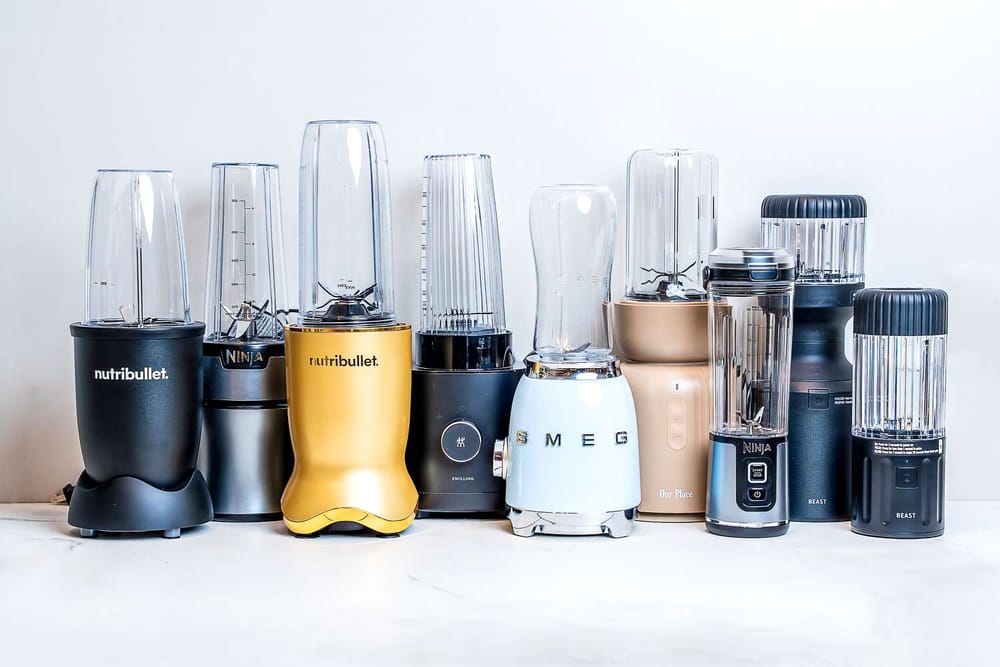

A good blender does more than make smoothies. It crushes ice, purees soups, makes nut butter, grinds coffee, and even kneads dough. The difference between a...
A good blender does more than make smoothies. It crushes ice, purees soups, makes nut butter, grinds coffee, and even kneads dough. The difference between a $30 blender and a $500 one isn't just power—it's versatility, durability, and results.
The blender market spans from basic personal blenders to commercial-grade machines. Most people fall somewhere in the middle, needing enough power for frozen fruit and ice without paying for restaurant-grade equipment.
Let's find the blender that matches your kitchen ambitions.
Blender Types Explained
Full-Size Countertop Blenders
Traditional pitcher-style blenders for the counter.
- Best for: Families, batch cooking, versatility
- Capacity: 48-72 oz
- Pros: Powerful, versatile, large batches
- Cons: Takes counter space, loud
Personal/Bullet Blenders
Compact blenders with single-serve cups.
- Best for: Individuals, smoothies, portability
- Capacity: 12-24 oz
- Pros: Compact, blend-and-go, affordable
- Cons: Limited capacity, less powerful
Immersion/Hand Blenders
Handheld stick blenders for in-pot blending.
- Best for: Soups, sauces, small tasks
- Pros: No transfer needed, easy cleanup, compact storage
- Cons: Less powerful, requires technique
High-Performance Blenders
Commercial-grade power for home use.
- Best for: Serious cooks, nut butters, hot soups
- Pros: Blend anything, durable, versatile
- Cons: Expensive, loud, large
Match the blender to your primary use. A $500 Vitamix is overkill for occasional smoothies; a $30 bullet blender can't make nut butter.
Top Blenders for 2026
Best Overall: Vitamix E310 Explorian
Professional results at accessible price.
- Motor: 2 HP
- Capacity: 48 oz
- Features: Variable speed, pulse, self-cleaning
- Warranty: 5 years
- Price: ~$350
The E310 is Vitamix's entry point with full professional capability. Smaller container than premium models but same blending power.
Best Value: Ninja Professional Plus
Excellent performance at mid-range price.
- Motor: 1400 watts
- Capacity: 72 oz + 24 oz cups
- Features: Auto-iQ programs, single-serve cups included
- Warranty: 1 year
- Price: ~$120
The Auto-iQ programs take guesswork out of blending. Includes single-serve cups for smoothies on the go.
Best Personal Blender: Nutribullet Pro
The original bullet blender, refined.
- Motor: 900 watts
- Capacity: 32 oz, 24 oz cups
- Features: Blend-and-go design, dishwasher safe
- Warranty: 1 year
- Price: ~$80
Powerful enough for frozen fruit and ice. The flip-top lids make it truly grab-and-go.
Best Immersion: Breville Control Grip
Precision and power in hand blender form.
- Motor: 280 watts
- Features: 15 speeds, non-scratch base, ergonomic grip
- Includes: Whisk, chopper attachments
- Price: ~$130
The bell-shaped base reduces splatter. Variable speed gives precise control for emulsions and soups.
Best Premium: Vitamix A3500
The ultimate home blender.
- Motor: 2.2 HP
- Capacity: 64 oz
- Features: Touchscreen, 5 programs, wireless connectivity, self-detect containers
- Warranty: 10 years
- Price: ~$650
Built-in programs for smoothies, hot soups, frozen desserts, and more. The 10-year warranty reflects build quality.
Blender Comparison
| Blender | Type | Power | Capacity | Warranty | Price |
|---|---|---|---|---|---|
| Vitamix E310 | Full-size | 2 HP | 48 oz | 5 years | $350 |
| Ninja Professional Plus | Full-size | 1400W | 72 oz | 1 year | $120 |
| Nutribullet Pro | Personal | 900W | 32 oz | 1 year | $80 |
| Breville Control Grip | Immersion | 280W | N/A | 1 year | $130 |
| Vitamix A3500 | Full-size | 2.2 HP | 64 oz | 10 years | $650 |
What Can Different Blenders Handle?
Basic Blenders ($30-80)
- Soft fruits and vegetables
- Protein shakes with liquid
- Basic smoothies (may leave chunks)
- Sauces and dressings
Mid-Range Blenders ($80-200)
- Frozen fruit smoothies
- Ice crushing
- Nut milk (with straining)
- Soups (not hot blending)
- Hummus and dips
High-Performance Blenders ($300+)
- Everything above, plus:
- Nut butters from scratch
- Hot soup (friction heating)
- Grain flour
- Frozen desserts
- Dough kneading
Power and Performance
Understanding Wattage vs Horsepower
- Watts: Electrical input (what it draws)
- Horsepower: Mechanical output (what it delivers)
- Peak vs continuous: Marketing often cites peak; continuous matters more
Power Guidelines
| Task | Minimum Power |
|---|---|
| Soft smoothies | 300W |
| Frozen smoothies | 700W |
| Ice crushing | 1000W |
| Nut butter | 1400W+ |
| Hot soup blending | 1500W+ |
Blade Design Matters
- Stacked blades: Better for thick mixtures
- Flat blades: Better for liquids
- Blade material: Stainless steel is standard; hardened steel lasts longer
Features Worth Having
Essential Features
- Variable speed: Control texture precisely
- Pulse function: Quick bursts for chunky results
- Secure lid: Prevents disasters
- Easy cleaning: Dishwasher-safe parts or self-clean
Nice-to-Have Features
- Pre-programmed settings: Consistent results
- Tamper tool: Push ingredients into blades
- Multiple containers: Different sizes for different tasks
- Hot blending capability: Make soup from raw ingredients
Features You Might Not Need
- Touchscreen: Buttons work fine
- App connectivity: Rarely useful
- Excessive speeds: 10 speeds is plenty
Blender Maintenance
After Each Use
- Rinse immediately (prevents stuck-on food)
- Self-clean: Add water + dish soap, blend 30 seconds
- Dry upside down
Weekly/Monthly
- Deep clean blade assembly
- Check gasket/seal condition
- Wipe base and controls
Extending Lifespan
- Don't overfill (max line exists for a reason)
- Add liquid first, then solids
- Don't run empty
- Let motor rest between long blends
Choosing the Right Blender
Choose Vitamix If:
- You'll use it daily
- You want to make nut butters, hot soups
- Long-term durability matters
- You can invest $350+
Choose Ninja If:
- You want good performance at reasonable price
- Pre-programmed settings appeal to you
- You need both full-size and personal cups
- Budget is $100-150
Choose Nutribullet If:
- Smoothies are your primary use
- You want grab-and-go convenience
- Counter space is limited
- Budget is under $100
Choose Immersion If:
- You make lots of soups and sauces
- You hate transferring hot liquids
- Storage space is limited
- You want a secondary blender
Got Questions About Blenders? Let's Clear Things Up.
Is Vitamix worth the price?
For daily users who want versatility, yes. A Vitamix lasts 10-20 years and handles tasks other blenders can't (nut butter, hot soup, grain grinding). For occasional smoothie makers, a $100-150 blender is sufficient.
Can I blend hot liquids in any blender?
No. Most blenders can't handle hot liquids—pressure builds and can blow the lid off. Only high-performance blenders (Vitamix, Blendtec) are designed for hot blending. Always check your manual.
Why is my blender leaving chunks?
Common causes: not enough liquid, overfilling, dull blades, or insufficient power. Try adding more liquid, blending in smaller batches, or using the tamper to push ingredients down.
How long do blenders last?
Budget blenders: 1-3 years. Mid-range: 3-7 years. High-performance (Vitamix): 10-20+ years. Motor burnout is the most common failure; don't overwork underpowered blenders.
Blender vs food processor—what's the difference?
Blenders need liquid and excel at smooth results (smoothies, soups, sauces). Food processors work with dry ingredients and excel at chopping, slicing, and dough. Many kitchens benefit from both. See our food processor guide.
A quality blender opens up culinary possibilities from morning smoothies to homemade nut butter. The Ninja Professional Plus offers the best value for most kitchens, while the Vitamix E310 is worth the investment for serious users. For more kitchen upgrades, check our guides on food processors, coffee makers, and air fryers.


Discussion
Sign up or sign in to join the conversation.