
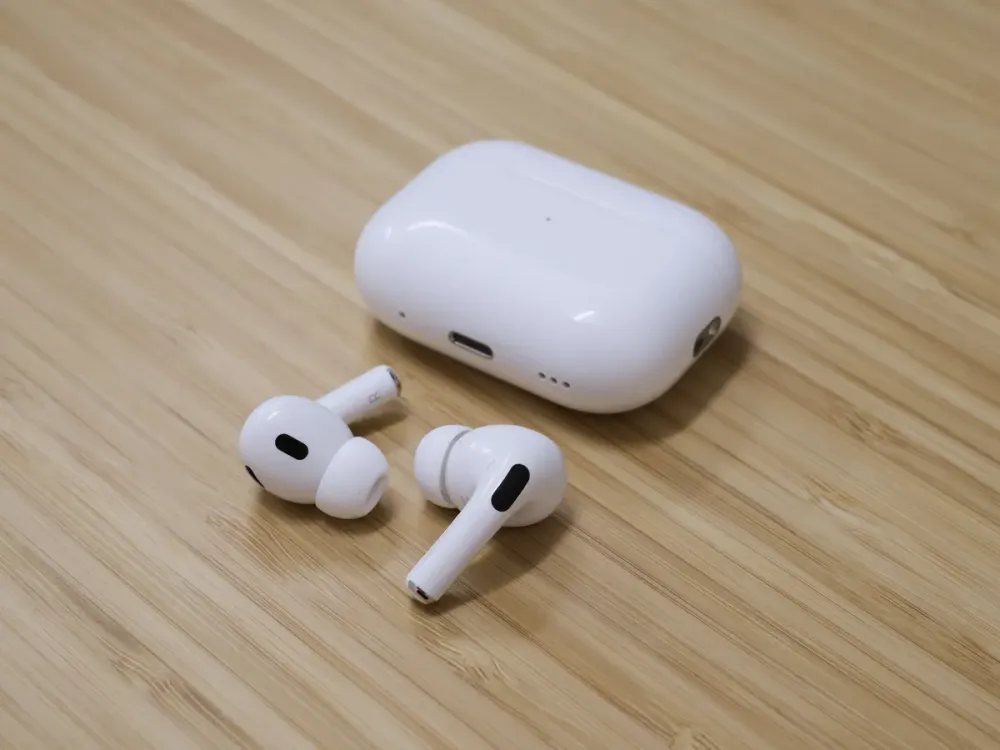

Apple's AirPods lineup can be confusing. You've got the standard AirPods, AirPods Pro, and even AirPods Max. For most people, the choice comes down to...
Apple's AirPods lineup can be confusing. You've got the standard AirPods, AirPods Pro, and even AirPods Max. For most people, the choice comes down to AirPods (3rd generation) versus AirPods Pro (2nd generation). They look similar, work with the same devices, but the experience is quite different.
After using both extensively, I can tell you the decision isn't just about price—it's about what you value in earbuds. Let's break down the real differences.
The Quick Comparison
Before diving deep, here's the overview:
| Feature | AirPods (3rd Gen) | AirPods Pro (2nd Gen) |
|---|---|---|
| Price | $169 | $249 |
| Design | Open, no tips | Silicone tips, sealed |
| Active Noise Cancellation | No | Yes |
| Transparency Mode | No | Yes |
| Spatial Audio | Yes | Yes |
| Battery Life | 6 hours | 6 hours (ANC on) |
| Water Resistance | IPX4 | IPX4 |
| Wireless Charging | Yes | Yes (MagSafe) |
| Find My (Precision Finding) | Case only | Case and each earbud |
Design and Fit
This is the fundamental difference that affects everything else.
AirPods (3rd Gen): Open Design
The standard AirPods sit in your ear without sealing the ear canal. They're essentially the same design philosophy as the original EarPods that came with iPhones, just wireless.
Pros:
- More comfortable for long wear (no ear fatigue)
- Better awareness of surroundings
- No need to find the right tip size
- Some people simply prefer the feel
Cons:
- Sound leaks in and out
- Bass response is limited
- May not fit all ear shapes securely
- No noise cancellation possible
AirPods Pro: Sealed Design
AirPods Pro use silicone tips that seal your ear canal. This creates passive noise isolation even before active noise cancellation kicks in.
Pros:
- Better sound quality (especially bass)
- Effective noise cancellation
- More secure fit for exercise
- Customizable fit with different tip sizes
Cons:
- Can cause ear fatigue during long sessions
- Some people dislike the "plugged" feeling
- Tips need occasional replacement
- Fit test required to find right size
The fit question is personal. Some people can't stand things in their ear canal; others find open earbuds fall out constantly. If possible, try both before deciding.
Sound Quality
Both sound good, but they sound different.
AirPods Sound Profile
The open design means:
- Bass: Present but not powerful—physics limits what's possible without a seal
- Mids: Clear and natural, great for podcasts and calls
- Highs: Crisp without being harsh
- Soundstage: More open, natural feeling
AirPods sound like quality speakers in a room—pleasant and natural, but not immersive.
AirPods Pro Sound Profile
The sealed design enables:
- Bass: Significantly more impactful and defined
- Mids: Rich and detailed
- Highs: Clear with good extension
- Soundstage: More intimate, in-your-head experience
AirPods Pro sound like quality headphones—more detailed and immersive, especially for music.
Spatial Audio
Both support Spatial Audio with head tracking, creating a surround sound experience for compatible content. It works better on AirPods Pro because the sealed design keeps external sound out, making the effect more convincing.
Active Noise Cancellation
This is the headline feature that justifies the Pro's higher price.
How ANC Works
AirPods Pro use external microphones to detect ambient noise, then generate inverse sound waves to cancel it out. Internal microphones fine-tune the cancellation based on how the earbuds fit in your ears.
What ANC Blocks
- Excellent: Airplane engine noise, HVAC hum, train rumble
- Good: Office chatter, street noise, coffee shop ambiance
- Moderate: Sudden sounds, voices directly addressing you
- Limited: High-pitched sounds, very loud environments
Real-World Impact
ANC transforms the listening experience in noisy environments. On a plane, you can listen at lower volumes. In an office, you can focus without cranking up the music. It's genuinely useful, not just a gimmick.
Transparency Mode
AirPods Pro also offer Transparency mode, which uses the microphones to pipe outside sound in. It's remarkably natural—you can have a conversation without removing the earbuds. Standard AirPods don't need this because they're already open.
For more on audio gear, check out our guide on best wireless earbuds for running.
Battery Life
Both offer similar battery life, but with caveats.
Earbud Battery
- AirPods: 6 hours of listening
- AirPods Pro: 6 hours with ANC on, longer with ANC off
Case Battery
- AirPods: 30 hours total with case
- AirPods Pro: 30 hours total with case
Charging
Both cases support:
- Lightning cable charging
- Qi wireless charging
- MagSafe charging (Pro case snaps to MagSafe chargers)
The Pro case also has a built-in speaker for Find My alerts and a lanyard loop.
Features Comparison
Both Have:
- Automatic device switching between Apple devices
- "Hey Siri" voice activation
- Audio sharing (two sets of AirPods, one device)
- Announce notifications
- Spatial Audio with head tracking
- Adaptive EQ
AirPods Pro Exclusive:
- Active Noise Cancellation
- Transparency Mode
- Conversation Awareness (lowers volume when you speak)
- Personalized Spatial Audio
- Precision Finding for each earbud
- Touch control for volume (swipe on stem)
Controls
AirPods: Press the stem to play/pause, skip tracks, answer calls, activate Siri AirPods Pro: Same plus swipe for volume, press and hold for ANC/Transparency toggle
Use Case Recommendations
Choose AirPods If:
- You hate in-ear earbuds: The open design is more comfortable for many people
- You need awareness: Walking, cycling, or working where you need to hear surroundings
- Budget matters: $80 savings is significant
- You mostly use them for calls: Both are excellent for calls
- Comfort is priority: Open design causes less ear fatigue
Choose AirPods Pro If:
- You commute on public transit: ANC makes a huge difference
- You work in noisy environments: Focus without cranking volume
- You're serious about music: Better sound quality, especially bass
- You exercise: More secure fit with silicone tips
- You travel frequently: ANC on planes is transformative
- You want the latest features: Conversation Awareness, Personalized Spatial Audio
The Hybrid Approach
Some people own both:
- AirPods for daily casual use, calls, awareness situations
- AirPods Pro for commuting, travel, focused listening
If budget allows, this gives you the best of both worlds.
Durability and Longevity
Build Quality
Both are well-made, but the Pro's silicone tips are a wear item. Apple includes multiple sizes, and replacement tips are available. The stems and cases are similarly durable on both models.
Battery Degradation
Like all lithium batteries, AirPods batteries degrade over time. Expect noticeable degradation after 2-3 years of heavy use. Apple offers battery service, but it's often more economical to replace the earbuds.
Water Resistance
Both are IPX4 rated—resistant to splashing water and sweat, but not submersion. Don't swim with them or leave them in the rain.
Value Analysis
AirPods at $169
You get excellent earbuds that integrate seamlessly with Apple devices. For calls, podcasts, and casual music listening, they're fantastic. The open design is a feature, not a limitation, for many use cases.
AirPods Pro at $249
The $80 premium buys you:
- Active Noise Cancellation (worth ~$50 alone)
- Better sound quality
- More secure fit
- Transparency Mode
- Additional features
For frequent travelers or anyone in noisy environments, the Pro easily justifies its price.
Alternatives to Consider
- AirPods (2nd Gen): Still available cheaper, but missing features
- Beats Fit Pro: Similar to AirPods Pro with wing tips for exercise
- AirPods Max: Over-ear for ultimate sound quality ($549)
Got Questions About AirPods vs AirPods Pro? Let's Clear Things Up.
Are AirPods Pro worth $80 more than regular AirPods?
For most people, yes. Active Noise Cancellation alone is worth the premium if you're ever in noisy environments. The better sound quality and more secure fit are bonuses. The only reason to choose standard AirPods is if you specifically prefer the open design.
Do AirPods Pro hurt your ears?
Some people experience discomfort with in-ear earbuds. AirPods Pro come with three tip sizes—try all of them. If none are comfortable after a break-in period, the open AirPods design might suit you better. Ear fatigue during long sessions is normal with any sealed earbuds.
Can I use AirPods Pro without noise cancellation?
Yes. You can turn ANC off entirely, use Transparency mode, or let Adaptive mode switch automatically. With ANC off, battery life improves slightly. The earbuds still provide passive isolation from the silicone tips.
Which is better for phone calls?
Both are excellent for calls. The Pro's ANC can help you hear callers better in noisy environments, but the standard AirPods' open design lets you hear your own voice more naturally. Call quality for the person on the other end is similar.
Do AirPods work with Android?
Yes, but with limitations. Basic playback and calls work fine. You lose features like automatic ear detection, battery status in the notification area, seamless device switching, and "Hey Siri." For Android users, there are better options at similar prices.
Ready to upgrade your audio experience? Explore more tech guides and reviews at Celmin to find the perfect gear for your lifestyle. https://celmin.ca


Discussion
Sign up or sign in to join the conversation.